
Imagine discovering a life-saving cancer drug in months instead of decades. Imagine being able to test thousands of molecular combinations without running a single physical experiment, and knowing with near-atomic precision which compound is most likely to work inside the human body. For decades, this vision has felt almost impossible. Today, it is becoming real — and the reason is quantum chemistry.
Traditional drug discovery is painfully slow, expensive, and uncertain. On average, it takes more than 10 years and over $2 billion to bring a single drug to market, and more than 90% of candidates fail somewhere along the way. Even with powerful classical supercomputers, scientists are forced to rely on approximations when modeling how molecules behave, interact, and react. Those approximations, while useful, hide critical details that often determine whether a drug succeeds or fails.
This is where quantum computing is changing the rules. At the heart of this transformation are qubits — quantum bits that behave in fundamentally different ways from classical bits. Unlike classical computers, which struggle with the exponential complexity of molecular systems, quantum computers operate using the same laws of physics that govern atoms and electrons themselves. This makes them uniquely suited for simulating chemistry at a level of accuracy that classical machines simply cannot reach.
In quantum chemistry, the goal is not just faster computation. It is deeper understanding. Molecules are quantum systems by nature. Their behavior is dictated by electron interactions, quantum states, and energy landscapes that grow exponentially more complex as molecules become larger. Classical computers must simplify these systems using techniques like Density Functional Theory or Hartree–Fock approximations. Qubits, by contrast, can represent superpositions of molecular states and capture electron correlations directly, allowing simulations that more closely mirror reality.
By 2026, this shift is no longer theoretical. Hybrid quantum-classical systems are already delivering measurable value in early-stage pharmaceutical research. Quantum annealers are optimizing vast chemical search spaces in minutes rather than weeks. Gate-based quantum processors are accurately modeling small but biologically relevant molecules. And new hybrid workflows are combining quantum simulations with classical machine learning to tackle problems once thought unreachable.
Several breakthroughs illustrate how far the field has come. PolarisQB’s QuADD platform has demonstrated how quantum annealing can rapidly generate and optimize drug candidates using D-Wave systems. Pasqal and Qubit Pharmaceuticals have shown how hybrid quantum-classical simulations can analyze protein hydration — a subtle but critical factor in drug binding that classical models often misjudge. Meanwhile, major players like IBM and Google continue to push electronic structure simulations forward, laying the foundation for more complex pharmaceutical applications, including biologics and mRNA-based therapies.
This momentum signals something profound. Quantum computing drug discovery is no longer about distant promises or speculative headlines. It is about practical tools that improve accuracy, reduce wasted effort, and dramatically shorten the path from idea to viable medicine. While fully fault-tolerant quantum computers are still years away, today’s noisy intermediate-scale quantum systems are already reshaping how scientists explore chemical space.
In this article, we will explore six transformative ways qubits are revolutionizing drug design. From ultra-precise molecular simulations to accelerated lead identification, protein–ligand interaction modeling, reaction pathway prediction, hybrid quantum-classical pipelines, and the emerging future of personalized medicine, each section is grounded in real progress, real companies, and real patient impact.
More importantly, this is not a story about machines replacing scientists. It is about empowering researchers with tools that finally match the true complexity of chemistry. As quantum chemistry matures, drug discovery is shifting from educated guesswork toward precision-driven design. And in that shift lies the potential to save millions of lives.
The next life-saving drug may not be discovered by chance. It may be designed — inside a quantum simulation.
Why Drug Discovery Needs Quantum Power
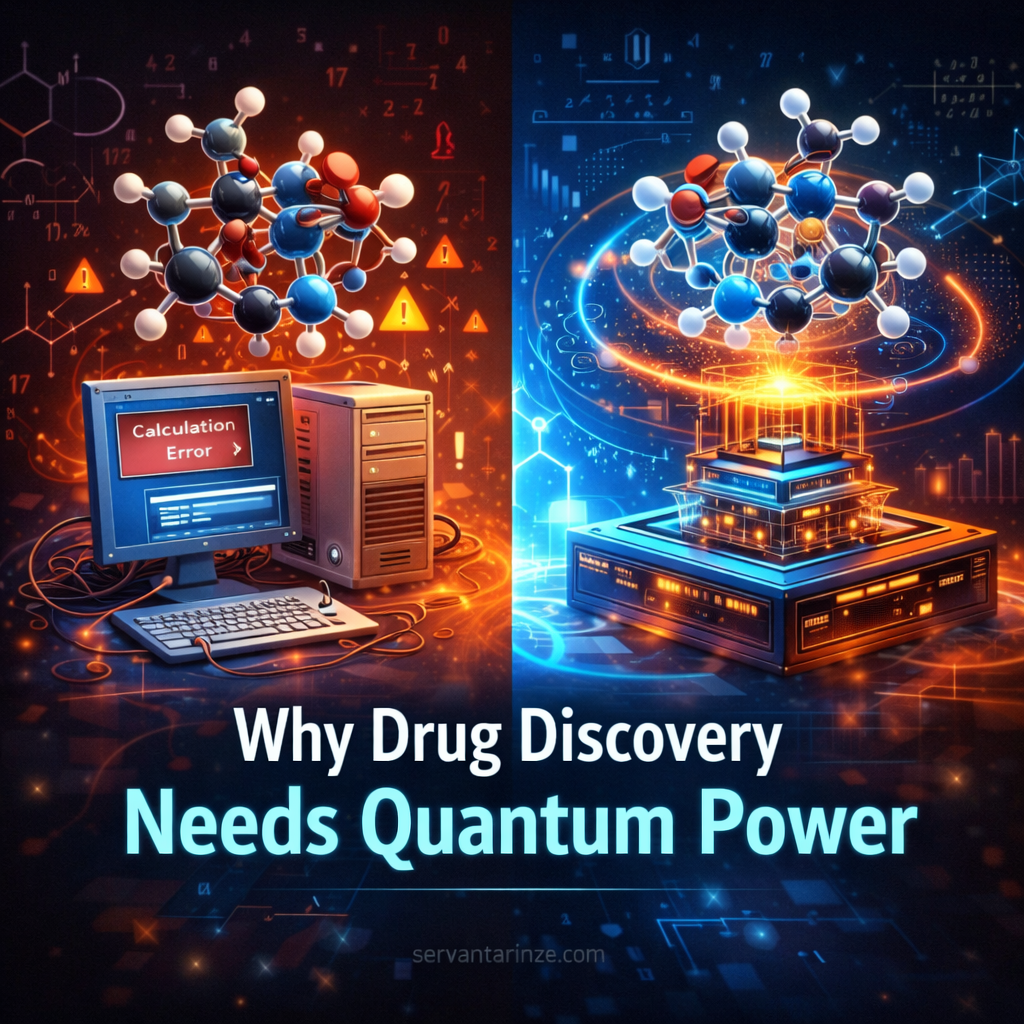
At its core, drug discovery is a chemistry problem — and chemistry is governed by quantum mechanics. Every interaction between a drug molecule and a biological target depends on how electrons move, interact, and reorganize themselves. As molecules grow larger and more complex, accurately predicting this behavior becomes extraordinarily difficult. This is the fundamental reason classical computing struggles in pharmaceutical research.
The main obstacle is known as the many-body problem. In molecular systems, every electron interacts with every other electron, and the number of possible configurations grows exponentially with system size. Even a relatively small drug molecule can involve interactions that explode beyond what classical computers can track exactly. To cope with this, classical simulations rely on approximations that simplify electron behavior, trading accuracy for feasibility.
Methods such as Density Functional Theory and Hartree–Fock have been invaluable for decades, but they come with limits. They often fail to capture subtle electron correlations that determine binding strength, reaction pathways, and molecular stability. In drug discovery, these “small errors” are not small at all. They can mean the difference between a compound that works in silico but fails in clinical trials, and one that successfully becomes a medicine.
This is where quantum computing introduces a fundamentally different approach. Instead of approximating quantum systems, quantum computers are quantum systems. Qubits can exist in superpositions of states and become entangled with one another, allowing them to naturally represent complex molecular wavefunctions. Problems that scale exponentially on classical machines can, in principle, be handled far more efficiently on quantum hardware.
The promise of quantum computing drug discovery lies in this alignment with nature. When simulating molecules, quantum processors can encode electronic structures directly, capturing interactions that classical approximations wash out. This capability is particularly important for systems involving transition metals, excited states, and enzymatic reactions — all of which are common in modern pharmaceuticals and notoriously difficult to model accurately.
Of course, the reality in 2026 is not yet full fault-tolerant quantum computing. Current devices operate in what is known as the noisy intermediate-scale quantum era. Qubits are still limited in number, susceptible to noise, and constrained by short coherence times. However, this has not stopped meaningful progress. Instead, researchers have adapted by building hybrid quantum-classical workflows that extract value from today’s hardware.
Quantum annealers, such as those developed by D-Wave, are being used to solve complex optimization problems inherent in drug design, including molecular configuration searches and candidate ranking. Gate-based quantum processors, while smaller, are achieving chemically relevant accuracy for specific molecules and reaction fragments. These approaches do not replace classical computing; they augment it, targeting the hardest parts of the problem where classical methods struggle most.
The stakes for the pharmaceutical industry are enormous. More than 90 percent of drug candidates fail during development, often after years of research and billions of dollars in investment. Many failures trace back to early-stage misunderstandings of molecular behavior, binding affinity, or metabolic pathways. By improving accuracy at the very beginning of the pipeline, quantum methods aim to reduce costly dead ends long before clinical trials.
This is why quantum power is not a luxury for drug discovery — it is a necessity. As diseases become more complex and personalized medicine becomes the goal, the chemical systems researchers must understand grow beyond the reach of classical approximations. Quantum computing does not simply make existing workflows faster; it opens doors to entirely new levels of insight.
With this foundation in place, the real transformation becomes clear. Qubits are not changing drug discovery in one single way. They are reshaping it across multiple stages of the pipeline. In the next section, we will explore the six most impactful ways quantum chemistry is already revolutionizing how life-saving drugs are designed.
The 6 Ways Qubits Are Revolutionizing Drug Design
Quantum computing is not transforming drug discovery in a single dramatic leap. Instead, its impact is unfolding across multiple stages of the pharmaceutical pipeline, each addressing a different bottleneck that has slowed progress for decades. Together, these advances form a new foundation for how medicines are designed, tested, and refined.
The following six breakthroughs represent the most meaningful ways qubits are reshaping modern drug design. Each one is already showing practical value today, even within the constraints of current quantum hardware, and each carries profound implications for how quickly and accurately life-saving drugs can reach patients.
1. Ultra-Precise Molecular Simulations (Electronic Structure and Ground States)

Every drug begins as a molecule, and every molecule is governed by the quantum behavior of its electrons. Accurately predicting how electrons arrange themselves around atomic nuclei — known as the electronic structure problem — is one of the most fundamental challenges in chemistry. It is also one of the hardest problems for classical computers to solve.
Classical simulations approximate electronic behavior because tracking all electron interactions exactly becomes computationally impossible as molecules grow in size. These approximations work reasonably well for simple systems, but they struggle with complex drug molecules, transition metals, and reactive intermediates. In pharmaceutical research, these are often the most important systems to understand.
Qubits change this equation by directly representing quantum states rather than approximating them. Through superposition and entanglement, a quantum processor can encode multiple electronic configurations simultaneously, allowing it to capture electron correlation effects that classical methods routinely miss. This capability enables more accurate predictions of molecular ground states, binding energies, and reaction potentials.
In practical terms, this means chemists can model how a drug molecule behaves at a level closer to physical reality. Small differences in electronic structure can dramatically alter how a compound binds to a target protein or how stable it remains inside the body. By resolving these details early, quantum simulations reduce the risk of pursuing candidates that look promising on paper but fail in practice.
By 2026, hybrid quantum-classical approaches are already delivering measurable improvements in electronic structure calculations. Instead of relying entirely on quantum hardware, researchers divide the problem, assigning the most computationally demanding components to quantum processors while classical systems handle the rest. This strategy allows today’s limited qubit counts to produce chemically meaningful results.
Early successes include simulations of small but biologically relevant molecules with accuracy beyond traditional methods. These results are particularly valuable for drug targets involving metal-containing enzymes, complex charge transfer, or excited electronic states — scenarios where classical approximations often break down. In such cases, even incremental gains in accuracy can save years of experimental trial and error.
The patient impact of this advancement is significant. When molecular simulations become more precise, fewer ineffective compounds enter costly development stages. Promising candidates are identified earlier, optimized more efficiently, and refined with greater confidence. For patients awaiting treatments for cancer, neurodegenerative diseases, or rare genetic disorders, this precision translates directly into faster access to effective therapies.
Ultra-precise molecular simulation is not about replacing laboratories or clinical trials. It is about ensuring that only the most viable candidates reach those stages. As quantum computing drug discovery continues to mature, electronic structure simulations will serve as the bedrock upon which smarter, faster, and more reliable drug design is built.
2. Accelerated Lead Identification and Optimization
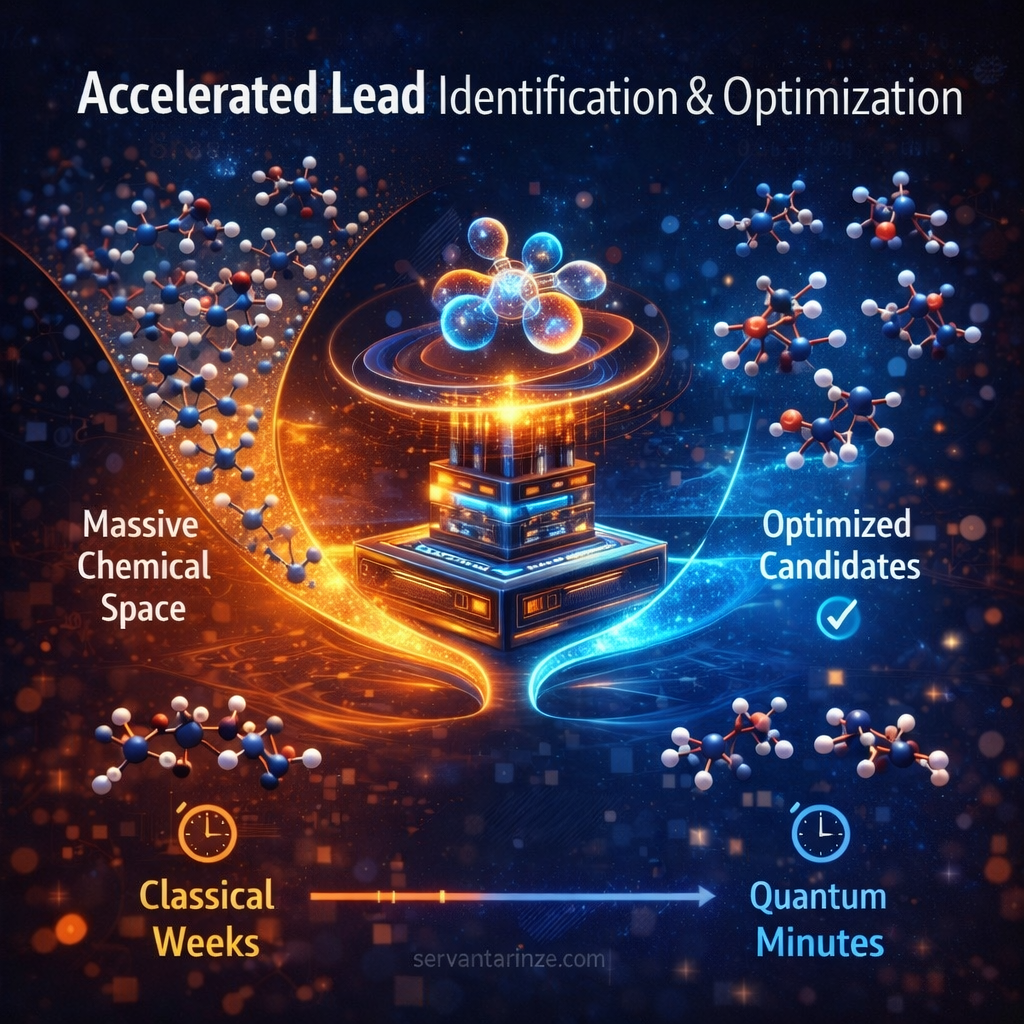
Once a biological target is identified, drug discovery enters one of its most difficult phases: finding the right molecular candidates that can bind effectively, safely, and reliably. This stage, known as lead identification and optimization, requires searching through an enormous chemical space. The number of possible drug-like molecules is estimated to exceed 10 to the power of 60, a scale so vast that exhaustive classical search is impossible.
Classical approaches narrow this space using heuristics, rules of thumb, and iterative screening. While effective to a degree, these methods often miss promising candidates or spend excessive time refining molecules that later fail. Optimization becomes a slow, trial-and-error process where weeks or months may pass between meaningful improvements.
Quantum computing introduces a new paradigm for this problem through quantum optimization. In particular, quantum annealing excels at exploring large combinatorial spaces and identifying low-energy solutions efficiently. For drug discovery, this translates into rapidly identifying molecular configurations that best satisfy multiple constraints, such as binding affinity, stability, and manufacturability.
By 2026, one of the most visible demonstrations of this capability comes from PolarisQB’s QuADD platform. Using quantum annealers, QuADD can generate and optimize drug candidates in minutes or hours rather than weeks. Instead of evaluating molecules one by one, the system searches across vast molecular landscapes simultaneously, identifying high-quality candidates early in the process.
This acceleration does not simply save time. It fundamentally changes how chemists work. Faster feedback loops allow researchers to test more hypotheses, explore unconventional molecular structures, and refine candidates with greater confidence. The result is a pipeline that moves with both speed and intelligence, reducing wasted effort and focusing resources where they matter most.
For patients, this means shorter timelines between discovery and treatment. Diseases that once waited years for viable drug candidates can now see progress measured in months. As quantum optimization tools mature, accelerated lead identification will become one of the most immediately impactful applications of quantum computing drug discovery.
3. Protein–Ligand Binding and Protein Hydration Analysis
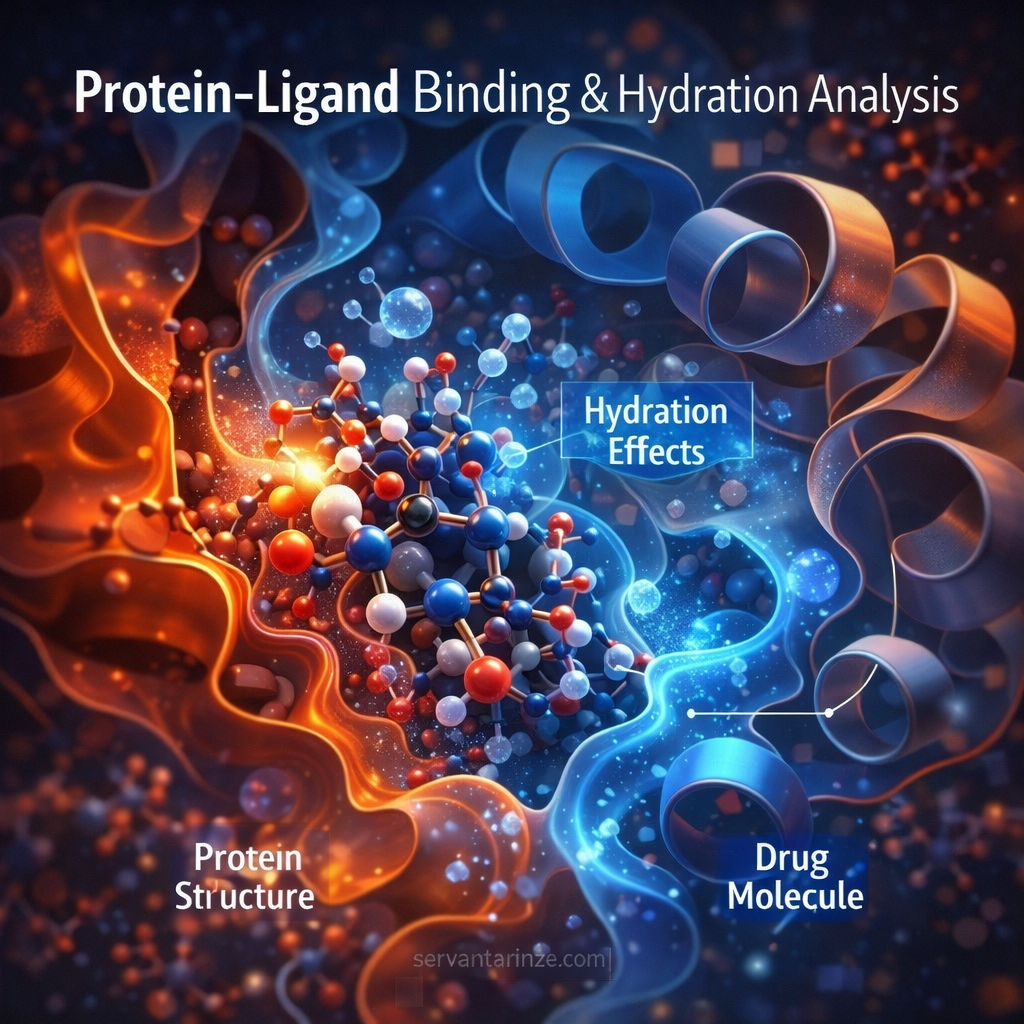
Understanding how a drug molecule binds to its target protein is central to pharmaceutical success. Binding strength, selectivity, and stability all depend on subtle interactions at the atomic level. Among the most challenging factors to model accurately is the role of water molecules, especially those trapped within protein binding sites.
Protein hydration plays a critical role in drug efficacy. Water molecules can stabilize or destabilize binding, influence molecular orientation, and alter reaction pathways. Classical simulations often struggle to model these effects precisely, particularly when water molecules are buried deep within protein structures. Small inaccuracies in hydration modeling can lead to large errors in predicted binding affinity.
Quantum chemistry offers a powerful way forward by enabling more accurate treatment of these interactions. Hybrid quantum-classical simulations allow quantum processors to model the most complex regions of protein–ligand systems, while classical methods handle the surrounding environment. This targeted use of quantum resources delivers improved accuracy without requiring large-scale quantum hardware.
A notable 2026 example is the collaboration between Pasqal and Qubit Pharmaceuticals, which focuses on protein hydration analysis using hybrid quantum workflows. Their approach examines how water molecules interact with proteins at a quantum level, providing insights that classical models frequently miss. These insights are particularly valuable for drug targets where hydration dynamics determine success or failure.
By capturing the quantum nature of these interactions, researchers gain a clearer picture of how molecules behave inside real biological environments. This improves hit-to-lead accuracy and reduces late-stage surprises that often derail promising candidates. In practical terms, it means fewer failed trials and more reliable predictions of therapeutic performance.
As protein–ligand modeling becomes more precise, drug design shifts from educated guesswork toward rational engineering. For patients, this translates into drugs that are not only more effective but also safer, as improved modeling reduces the risk of unintended interactions and side effects.
4. Reaction Pathway and Transition State Prediction
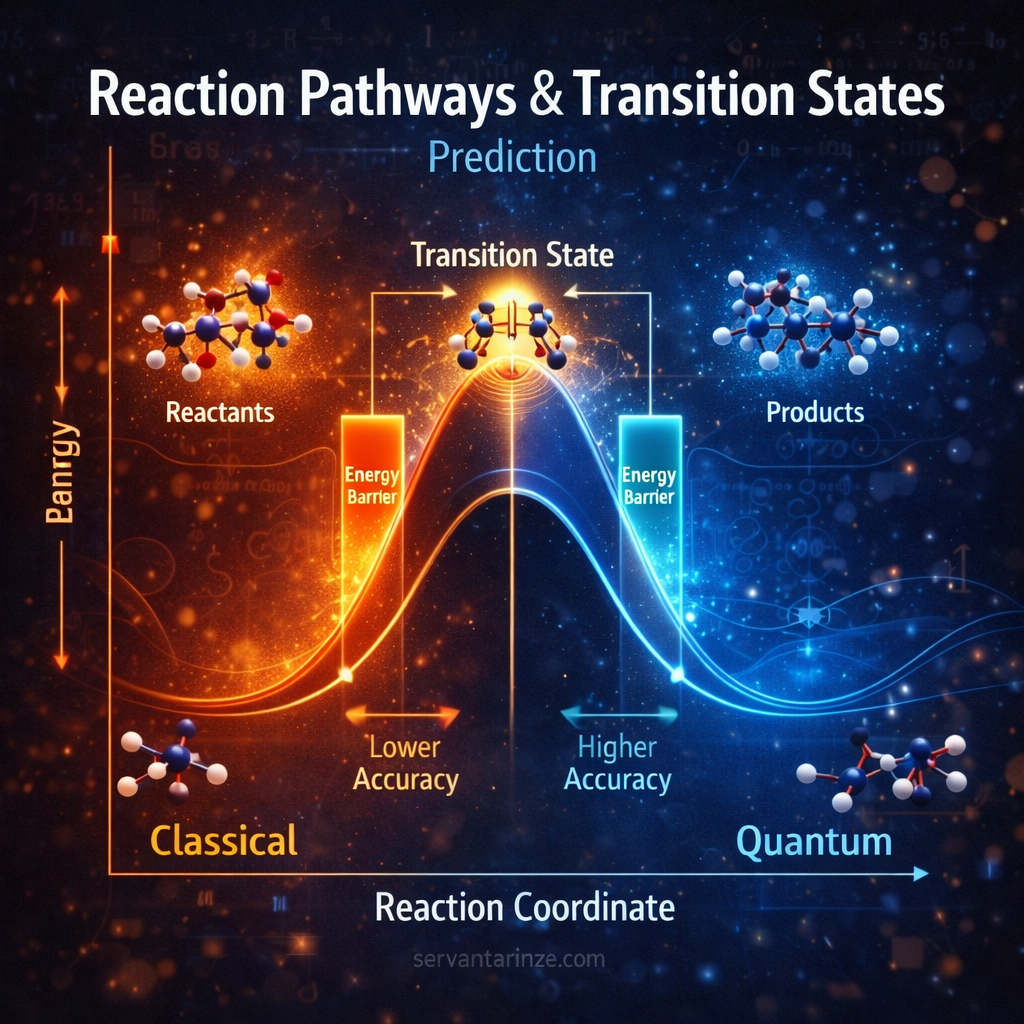
Designing a drug is not only about how strongly a molecule binds to a target, but also about how it reacts, transforms, and breaks down inside the body. These processes are governed by chemical reaction pathways and transition states, which define the energy barriers a molecule must cross during a reaction. Accurately predicting these pathways has long been one of the most difficult challenges in computational chemistry.
Classical simulations often struggle with reaction mechanisms because transition states are rare, fleeting, and highly sensitive to electronic structure details. Small errors in energy estimation can lead to incorrect predictions about reaction speed, stability, or feasibility. In drug development, this uncertainty affects everything from synthesis planning to metabolism and toxicity assessment.
Quantum computing provides a natural advantage in this domain because reaction pathways are inherently quantum phenomena. By modeling electronic rearrangements directly, qubits can more accurately estimate activation energies and identify viable transition states. Even with today’s hardware limitations, hybrid quantum-classical methods are already improving reaction modeling for specific subsystems.
One area of particular importance is drug metabolism. Enzymes such as Cytochrome P450 play a central role in breaking down pharmaceuticals in the liver. Predicting how a drug will interact with these enzymes is essential for determining dosage, side effects, and safety. Quantum-enhanced simulations allow researchers to model enzymatic reaction mechanisms with greater fidelity, reducing reliance on late-stage experimental corrections.
The impact of this capability extends beyond individual drugs. Improved reaction pathway prediction accelerates synthetic route planning, enabling chemists to design more efficient and sustainable manufacturing processes. This reduces development time, lowers production costs, and minimizes chemical waste — all while improving confidence in the final product.
As quantum computing drug discovery matures, reaction modeling will increasingly shift from approximate estimation to precise, physics-based prediction. For patients, this means safer drugs, fewer adverse reactions, and more predictable therapeutic outcomes.
5. Hybrid Quantum–Classical Pipelines for Real-World Scale
One of the most important realizations in modern quantum chemistry is that quantum computers do not need to work alone. The most effective systems combine quantum processors with classical computing and machine learning, forming hybrid pipelines that are practical, scalable, and immediately useful.
In these workflows, classical computers manage large-scale data handling, molecular databases, and machine learning models, while quantum processors focus on the hardest quantum subproblems. This division of labor allows today’s limited quantum hardware to deliver value far beyond what raw qubit counts might suggest.
By 2026, several platforms exemplify this hybrid approach. Quantum simulation software integrates seamlessly with classical optimization tools, enabling iterative refinement of molecular models. Machine learning accelerates candidate screening, while quantum modules provide high-accuracy corrections where classical methods fall short.
A notable example is the QIDO platform developed through collaborations involving Quantinuum and QSimulate. These pipelines target industrial-scale chemistry challenges, including drug synthesis and process optimization. By embedding quantum simulations within established workflows, they make quantum chemistry accessible to pharmaceutical teams without requiring deep quantum expertise.
The power of hybrid pipelines lies in their realism. They acknowledge current hardware limits while extracting meaningful advantages today. Instead of waiting for fault-tolerant quantum computers, the pharmaceutical industry is already benefiting from incremental gains that compound over time.
For drug developers, this means smoother integration, lower risk, and faster adoption. For patients, it means that quantum-enhanced insights begin influencing drug pipelines years earlier than once expected. Hybrid quantum-classical systems are not a temporary compromise; they are the bridge that brings quantum computing drug discovery into everyday pharmaceutical practice.
6. Personalized Medicine and mRNA / Biologics Design
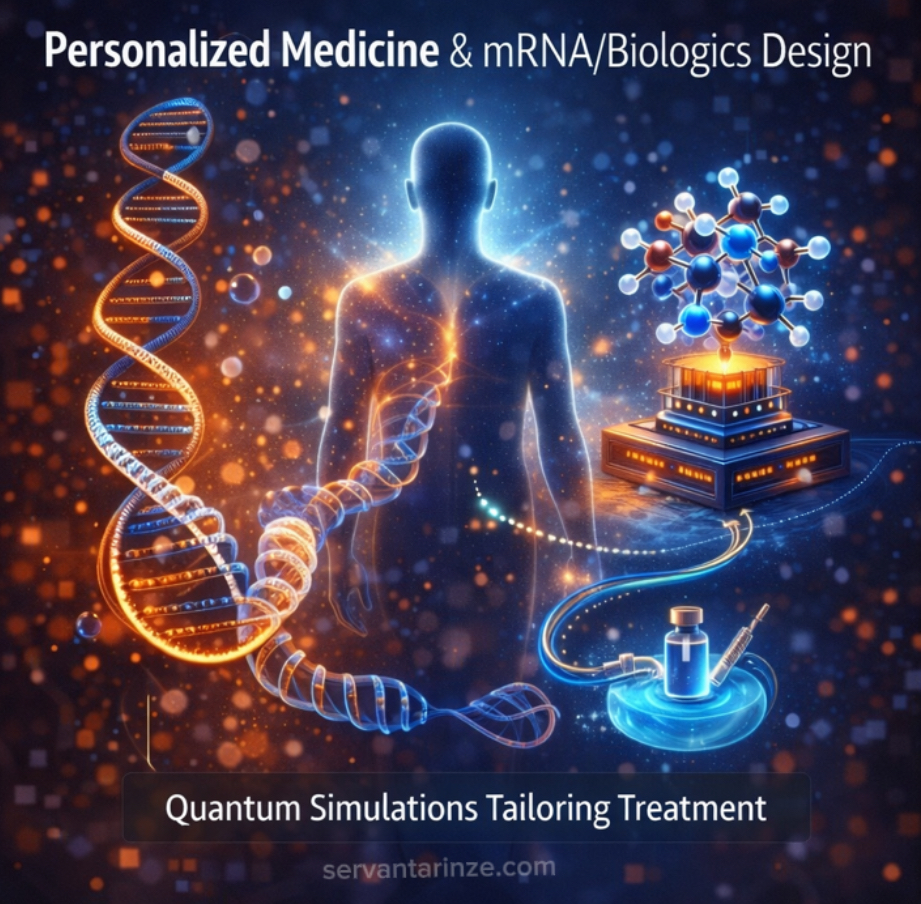
One of the most profound frontiers in modern medicine is personalization — designing therapies that account for individual genetic, molecular, and physiological differences. Traditional drug development has largely followed a one-size-fits-all model, but many diseases do not behave uniformly across patients. Quantum chemistry is opening new possibilities for understanding and designing treatments at a far more individualized level.
Biologics, including antibodies and mRNA-based therapies, are particularly complex systems. Their behavior depends on intricate folding patterns, molecular interactions, and dynamic environments that challenge classical simulation tools. Small changes in molecular structure or sequence can significantly alter effectiveness, stability, or immune response.
Quantum-enhanced simulations provide a way to explore these complexities more deeply. By modeling quantum interactions within biologics and nucleic acids, researchers can better predict how subtle variations influence therapeutic performance. Hybrid quantum-classical approaches are especially valuable here, allowing quantum processors to focus on the most sensitive molecular regions while classical systems manage broader-scale modeling.
By 2026, early progress in this area includes quantum-assisted studies of mRNA structures and stability. These simulations aim to improve sequence design, reduce degradation, and enhance delivery efficiency. For patients, this could mean vaccines and gene-based therapies that are not only more effective but also more precisely tuned to specific populations or even individuals.
Personalized medicine also benefits from quantum chemistry’s ability to simulate patient-specific molecular environments. In the future, quantum-enhanced models could help predict how a particular patient metabolizes a drug, how strongly it binds to their unique protein variants, or how likely they are to experience side effects. This vision represents a shift from reactive treatment to proactive, precision-driven care.
While this level of personalization is still emerging, the trajectory is clear. As quantum computing drug discovery advances, the gap between molecular simulation and individual patient outcomes continues to narrow. The result is a future where therapies are not just discovered faster, but designed smarter, safer, and more personally than ever before.
Leading Players and Key 2026 Milestones in Quantum Drug Discovery
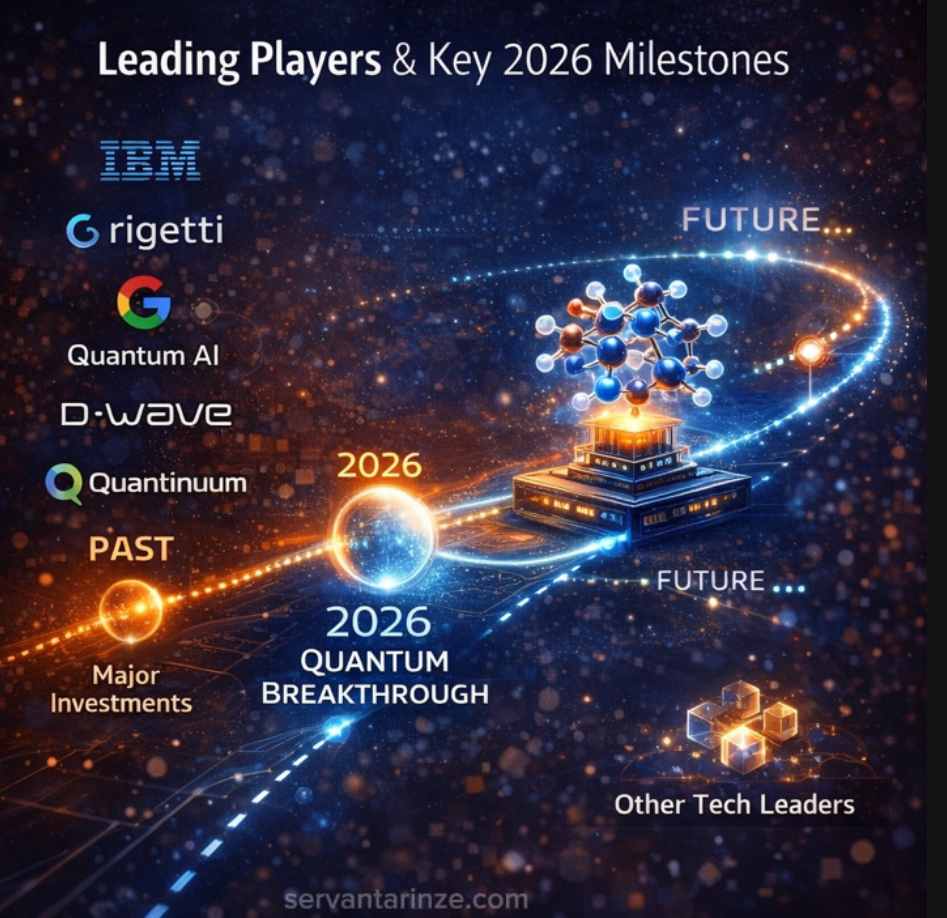
The rapid progress in quantum chemistry and pharmaceutical applications is driven by a growing ecosystem of technology companies, research institutions, and industry partnerships. By 2026, several organizations have emerged as leaders, each contributing distinct capabilities to the evolving landscape of quantum computing drug discovery.
PolarisQB has gained attention for its QuADD platform, which applies quantum annealing to accelerate molecular generation and optimization. By leveraging quantum optimization techniques, the platform demonstrates how early-stage drug design can be dramatically compressed in time without sacrificing quality.
Qubit Pharmaceuticals, in collaboration with Pasqal, focuses on hybrid quantum-classical simulations for complex biochemical problems such as protein hydration. Their work highlights how targeted quantum simulations can improve accuracy in areas where classical methods routinely struggle.
Quantinuum and QSimulate are advancing hybrid quantum pipelines that integrate seamlessly into industrial chemistry workflows. Platforms like QIDO aim to bring quantum-enhanced simulation into real-world pharmaceutical and chemical process development, bridging the gap between experimental research and scalable manufacturing.
Large technology leaders continue to play a foundational role. IBM’s quantum research efforts in healthcare emphasize electronic structure modeling, reaction dynamics, and biologics simulation, while Google Quantum AI continues pushing the boundaries of quantum algorithms and error mitigation relevant to chemistry and materials science.
Collectively, these milestones signal a broader shift. The field is moving from proof-of-concept demonstrations toward practical utility. Quantum annealing is delivering optimization gains today, hybrid simulations are improving molecular accuracy now, and steady progress toward fault-tolerant quantum systems promises even deeper impact in the coming decade.
The roadmap is becoming clearer. Near-term value comes from hybrid and specialized quantum applications. Medium-term advances will expand system sizes and accuracy. Long-term, fault-tolerant quantum computers are expected to unlock full molecular simulations at a scale classical machines cannot approach.
Challenges and the Realistic Timeline Ahead
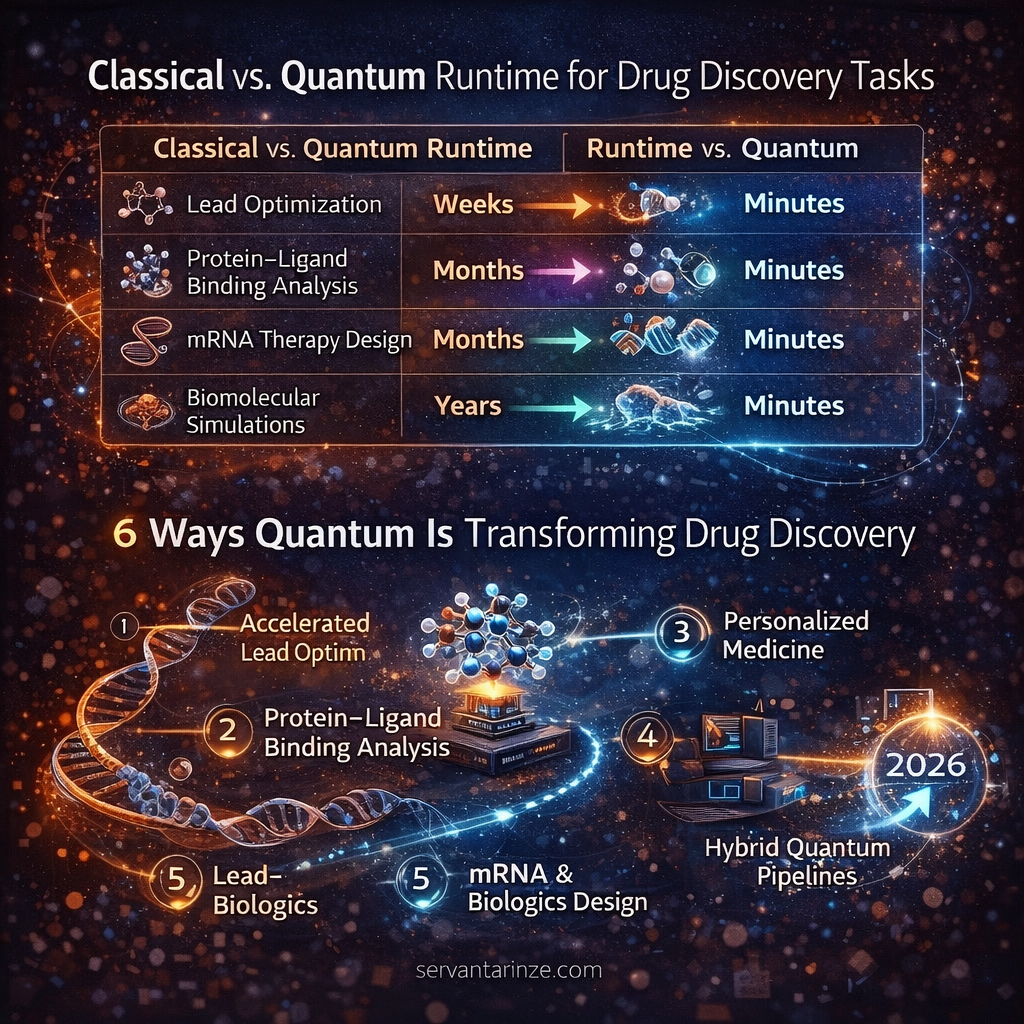
Despite its rapid progress, quantum chemistry is not without limitations. Current quantum hardware still faces challenges related to noise, qubit stability, error rates, and scalability. These constraints limit the size and complexity of molecular systems that can be simulated entirely on quantum processors today.
Rather than ignoring these realities, the most successful quantum drug discovery efforts have embraced them. Error mitigation techniques, problem decomposition, and hybrid quantum–classical workflows allow researchers to extract value from existing devices while steadily improving reliability. This pragmatic approach explains why meaningful results are already appearing in pharmaceutical research, even before fault-tolerant quantum computers arrive.
The timeline is becoming increasingly realistic. In the near term, quantum annealing and hybrid simulations will continue delivering optimization and accuracy gains in early-stage drug design. Over the next five to ten years, advances in qubit quality, error correction, and algorithm design are expected to unlock larger molecular simulations and more comprehensive reaction modeling.
Fully fault-tolerant quantum computers capable of simulating entire drug molecules without approximation are still a future milestone. However, the pharmaceutical industry does not need to wait for perfection. Incremental quantum advantages compound quickly, and each improvement reduces cost, risk, and development time. In drug discovery, even modest gains can translate into saved years — and saved lives.
Why This Moment Matters for Medicine
What makes this era unique is not just the technology, but the convergence of disciplines. Quantum physics, chemistry, artificial intelligence, and biotechnology are now working together in ways that were impossible a decade ago. Quantum computing drug discovery sits at the center of this convergence, offering tools that match the true complexity of biological systems.
As more pharmaceutical companies explore quantum-enhanced workflows, understanding the broader ecosystem becomes increasingly important. A closer look at emerging players driving this transformation can be found in our in-depth overview of top quantum startups changing the world, many of which are actively shaping the future of healthcare and life sciences.
At the same time, the rise of quantum technologies raises important questions about data security, especially as sensitive medical and genomic data become more deeply integrated into computational pipelines. Ensuring that future drug discovery platforms remain secure will be essential, and this challenge is already being addressed through advances in quantum-safe technologies, explored further in our guide on how quantum encryption keeps data safe.
Beyond industry developments, the scientific foundation of quantum chemistry continues to deepen through peer-reviewed research. Leading journals such as Nature regularly publish breakthroughs that inform and validate real-world applications, reinforcing confidence that today’s progress is built on solid scientific ground.
Conclusion: The Future of Drug Discovery Is Being Designed
Drug discovery has always been a race against time — against disease progression, against biological complexity, and against the limits of our tools. Quantum chemistry represents a turning point in that race. By aligning computation with the fundamental laws of nature, qubits are transforming how medicines are discovered, refined, and delivered.
From ultra-precise molecular simulations to accelerated lead optimization, from protein hydration modeling to reaction pathway prediction, and from hybrid pipelines to personalized medicine, quantum computing is steadily replacing guesswork with precision. These advances are not abstract. They are already influencing how scientists think, how companies invest, and how quickly therapies move forward.
The most important outcome is human. Faster discovery means earlier treatment. Better accuracy means fewer failures and safer drugs. And smarter design means hope for conditions that have long resisted traditional approaches, including rare diseases, aggressive cancers, and complex neurological disorders.
The next life-saving drug may not emerge from years of trial and error. It may be designed, tested, and optimized inside a quantum simulation. The future of medicine is not approaching slowly — it is already taking shape.
What disease do you hope quantum computing will help cure faster? Share your thoughts in the comments, explore our growing quantum technology library, and stay connected as we continue tracking how quantum science reshapes the world of healthcare and beyond.
Download the Full Industry Briefing (PDF)
This article provides a comprehensive overview of how quantum chemistry and quantum computing are reshaping drug discovery.
For readers who want a deeper, structured, and offline-friendly version of this analysis, the full 2026 Quantum Chemistry & Drug Discovery Industry Briefing is available as a downloadable PDF.
The briefing expands on the concepts discussed above, bringing together molecular simulation, reaction pathways, hybrid quantum–classical workflows, personalized medicine, and realistic timelines into a single, professionally designed document.
It is ideal for researchers, students, industry professionals, and anyone who wants a clear, research-driven reference they can read, save, and share.
Frequently Asked Questions About Quantum Computing Drug Discovery (FAQ)
What is quantum computing drug discovery?
Quantum computing drug discovery refers to the use of quantum computers to simulate molecular behavior, optimize chemical structures, and analyze complex biological interactions that are extremely difficult for classical computers to handle. By using qubits, researchers can model quantum effects in molecules more accurately, helping identify and design new drugs faster and with greater precision.
How does quantum chemistry improve drug discovery accuracy?
Quantum chemistry improves accuracy by modeling electron interactions directly instead of relying on approximations. This allows researchers to capture subtle molecular effects that influence binding strength, reaction pathways, and stability, reducing the risk of false positives that often fail during later clinical stages.
Are quantum-designed drugs already being developed today?
Yes, early-stage quantum-designed drug candidates are already being explored using hybrid quantum-classical systems. While fully quantum-designed drugs have not yet reached the market, quantum computing is actively influencing lead discovery, optimization, and molecular analysis in real pharmaceutical pipelines.
When will quantum computing have a major impact on pharmaceuticals?
Meaningful impact is already occurring through hybrid workflows and quantum optimization tools. Larger breakthroughs are expected over the next five to ten years as qubit quality improves and fault-tolerant quantum systems emerge, enabling more complete molecular simulations.
What types of diseases could benefit most from quantum drug discovery?
Diseases involving complex molecular interactions are likely to benefit the most, including cancer, neurodegenerative disorders, rare genetic diseases, and conditions requiring highly targeted therapies. Quantum simulations are especially valuable where classical models struggle to capture biological complexity.
How does quantum computing help reduce drug development time?
Quantum computing reduces development time by accelerating molecular screening, improving prediction accuracy, and eliminating weak candidates earlier in the pipeline. Faster optimization and fewer late-stage failures translate directly into shorter timelines and lower costs.
Is quantum computing replacing classical computing in drug research?
No, quantum computing complements classical computing rather than replacing it. The most effective approaches combine classical systems, machine learning, and quantum processors in hybrid workflows that leverage the strengths of each technology.
What role do hybrid quantum-classical systems play today?
Hybrid systems allow quantum computers to focus on the most difficult quantum subproblems while classical computers handle large-scale calculations and data management. This approach makes quantum computing drug discovery practical and valuable with today’s hardware limitations.
Can quantum computing enable personalized medicine?
Yes, quantum simulations have the potential to model patient-specific molecular interactions, helping predict how individuals respond to drugs. Over time, this capability could support more personalized, safer, and more effective treatments.
Is quantum computing drug discovery secure for sensitive medical data?
Security is a growing focus as quantum technologies advance. Quantum-safe encryption and post-quantum security methods are being developed alongside quantum computing to ensure that sensitive pharmaceutical and medical data remains protected.
Will quantum computing completely eliminate failed drug trials?
Quantum computing will not eliminate all failures, but it can significantly reduce them by improving early-stage accuracy. Better molecular insight leads to smarter decisions, fewer dead ends, and more reliable candidates entering clinical trials.
Why is quantum computing considered a breakthrough for chemistry?
Quantum computing is a breakthrough because it operates using the same physical principles that govern molecules themselves. This alignment allows chemists to simulate systems more naturally and accurately than ever before, opening new possibilities across pharmaceuticals and materials science.