
Your digital workspace powers almost everything you do today — from laptops and smartphones to cloud storage, video calls, and always-on applications. Yet behind this convenience lies a quiet and growing problem. Every extra device upgrade, unused file, and energy-hungry workflow contributes to a system that generates more than 62 million tons of electronic waste each year and consumes enormous amounts of electricity through data centers worldwide. The uncomfortable truth is that modern digital work is deeply entangled with waste, even when it feels invisible.
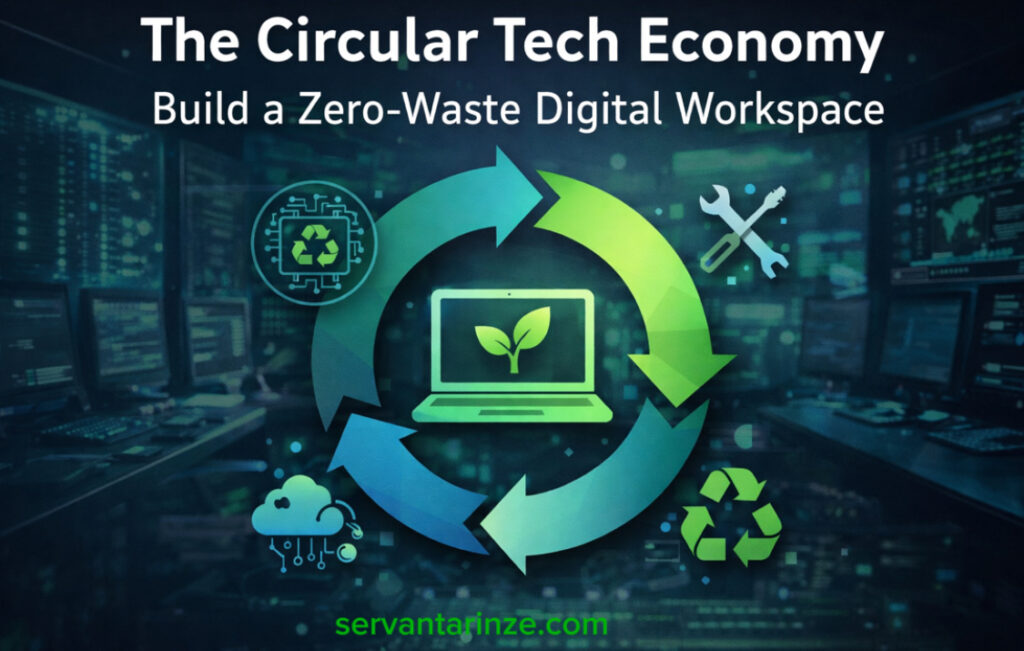
But what if your workspace could become part of the solution instead of the problem? What if the same tools that drive productivity could also support sustainability, cost savings, and long-term resilience? This is where the circular tech economy comes in — a shift in how we design, use, and manage technology so that waste is minimized, value is preserved, and resources are continually regenerated rather than discarded.
A zero-waste digital workspace is not about perfection or giving up technology. It is about intentional design and daily habits. It means choosing hardware that lasts longer, maintaining devices instead of replacing them prematurely, reducing unnecessary digital clutter, and aligning your tech usage with emerging sustainability standards. In practical terms, it is the difference between reacting to waste and actively designing it out of your digital life.
The urgency of this shift has never been clearer. As we move deeper into the second half of this decade, governments and industries are accelerating sustainability requirements. Digital Product Passports are beginning to reshape how electronics are tracked and reused. Right-to-repair laws are expanding globally. Major companies are investing heavily in circular initiatives, while individuals and small businesses are being asked to measure and reduce their environmental impact. The circular tech economy is no longer a future concept — it is becoming the operating system for how digital work will function.
This guide is designed to help you build a truly zero-waste digital workspace, step by step. You will learn how to rethink your hardware choices, optimize energy use, reduce digital waste, and adopt sustainable habits that align with both current realities and future regulations. Whether you work from home, manage a small team, or simply want a more responsible relationship with technology, this article will show you how to make your digital workspace cleaner, smarter, and more sustainable — without sacrificing performance.
Understanding the Problem: Tech’s Hidden Waste Footprint
To understand why the circular tech economy matters, we first need to confront the scale of the problem hiding behind everyday digital convenience. Electronic waste is now one of the fastest-growing waste streams in the world. Each year, tens of millions of tons of discarded devices — laptops, phones, routers, monitors, and accessories — are generated, yet only a small fraction is properly recycled. The rest often ends up in landfills or informal recycling systems that leak toxic materials into the environment.
Beyond physical waste, digital workspaces also carry a heavy energy footprint. Data centers alone are estimated to consume between one and two percent of global electricity, a figure that continues to rise as cloud services, AI workloads, and high-resolution streaming become standard. Every email stored indefinitely, every unused file synced across devices, and every unnecessary background process quietly increases energy demand.
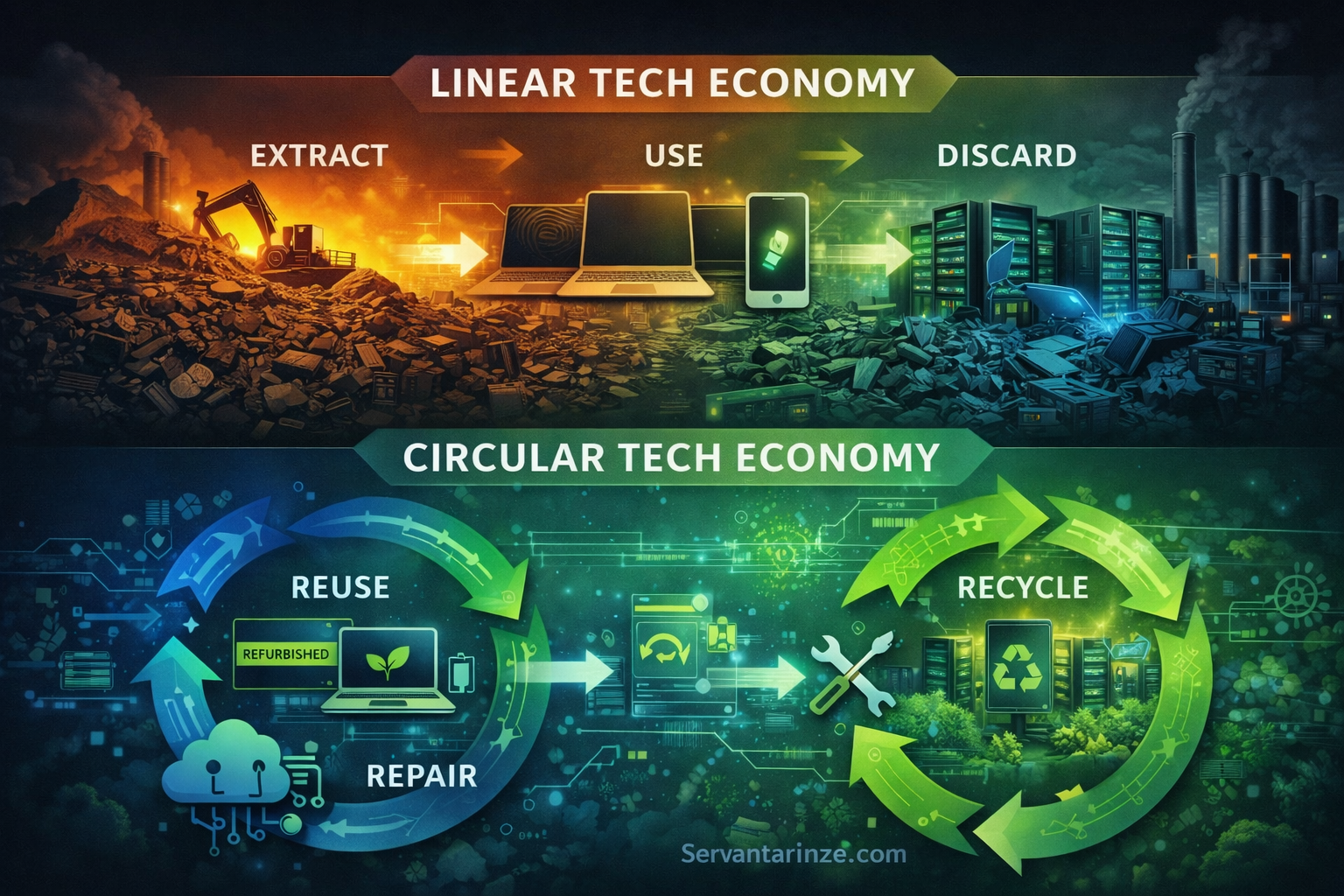
Much of this damage comes from a linear approach to technology. In a linear system, resources are extracted, turned into devices, used briefly, and then discarded. Devices are designed for replacement rather than repair, software updates push older hardware into obsolescence, and recycling is treated as an afterthought instead of a design principle. This extract–use–discard model is deeply inefficient and increasingly unsustainable.
The circular tech economy offers a fundamentally different model. Instead of maximizing short-term sales, circular systems focus on keeping technology in use for as long as possible. Devices are designed to be repaired, upgraded, refurbished, and eventually recycled in ways that recover valuable materials. Waste is treated as a design flaw, not an inevitable outcome. When applied to digital workspaces, this approach changes how we think about every tool we use.
By the middle of this decade, these ideas are being reinforced by regulation and market pressure. Extended Producer Responsibility rules are expanding, requiring manufacturers to take accountability for the full lifecycle of their products. Large organizations are committing to zero-waste targets, while consumers and professionals increasingly expect transparency around how technology is made and disposed of. The result is a growing alignment between sustainability goals and smart digital practices.
Your digital workspace sits right at the center of this transition. The laptop you choose, how long you keep it, the way you manage data, and how you dispose of old devices all directly influence waste and emissions. Understanding this hidden footprint is the first step toward transforming your workspace from a silent contributor to environmental harm into a practical example of the circular tech economy in action.
The 8 Pillars of a Zero-Waste Digital Workspace
Building a zero-waste digital workspace within the circular tech economy does not require radical change overnight. Instead, it is built on a set of practical pillars that guide how technology is chosen, used, and managed over time. These pillars are designed to work together — improving sustainability while also delivering long-term cost savings, better performance, and greater resilience as regulations and expectations continue to evolve.
1. Choose Modular, Repairable, and Upgradable Hardware
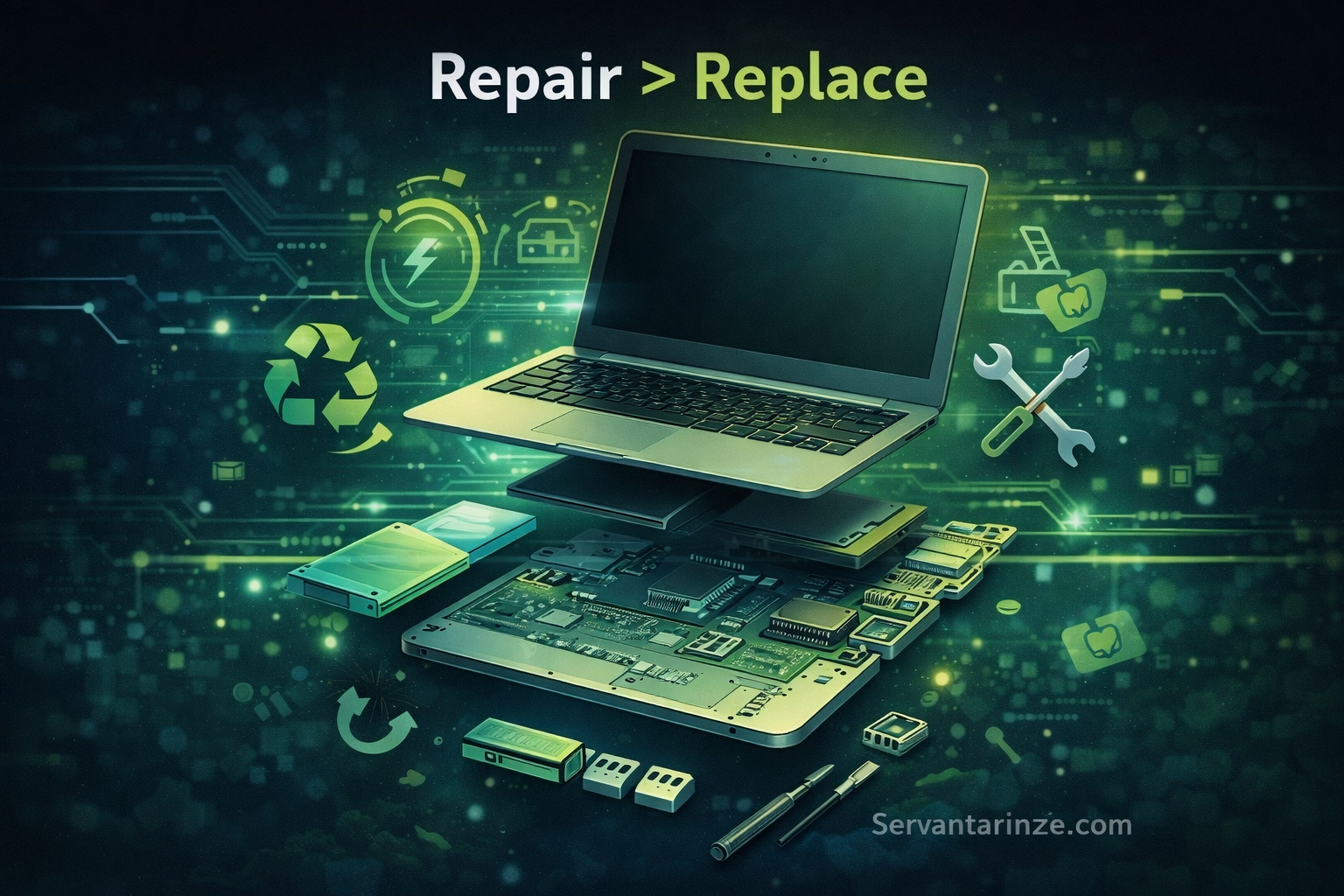
The foundation of a zero-waste digital workspace begins with hardware choices. Most electronic waste is created not because devices stop working, but because they are difficult or impossible to repair or upgrade. Batteries are sealed, components are soldered, and small failures force full replacements. This design philosophy directly conflicts with the principles of the circular tech economy.
Modular and repairable hardware flips this model. Devices are built so that key components — batteries, memory, storage, ports, even screens — can be replaced or upgraded independently. Instead of discarding an entire laptop due to a single failing part, users can extend the device’s life by years through targeted repairs or upgrades.
As we move deeper into this decade, right-to-repair legislation is expanding globally, and modular design is becoming more mainstream. Smartphones and laptops inspired by repair-first philosophies are gaining traction, while manufacturers are increasingly required to provide spare parts and repair documentation. Choosing hardware designed for longevity is no longer niche — it is becoming a smart, future-proof investment.
To apply this pillar in your workspace, prioritize devices that openly support repairs and upgrades. Research repair scores, check whether parts are user-replaceable, and consider modular designs when purchasing new equipment. When you align your hardware choices with circular design principles, you reduce waste at the source while protecting yourself from premature obsolescence.
2. Extend Device Lifespan Through Maintenance and Refurbishment
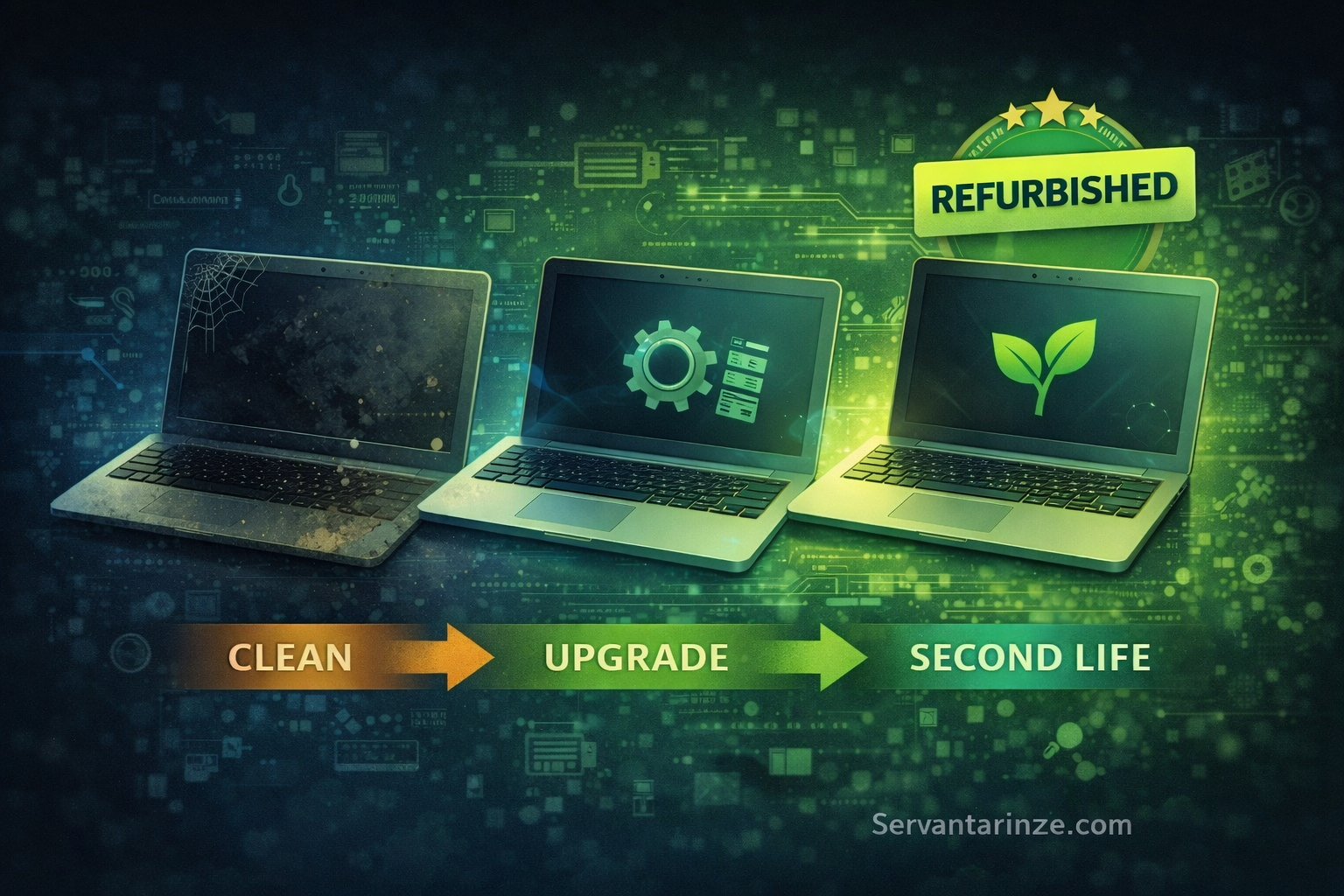
Even the most sustainable device becomes waste if it is poorly maintained. One of the most powerful yet overlooked aspects of the circular tech economy is lifespan extension. Keeping devices functional for longer dramatically reduces emissions, raw material extraction, and electronic waste — often more effectively than recycling alone.
Basic maintenance practices can add years to a device’s usable life. Regular cleaning prevents overheating, battery care preserves capacity, and software updates maintain security and performance. Simple habits such as managing startup applications, monitoring storage health, and replacing batteries instead of entire devices have an outsized impact on sustainability.
Refurbished and certified pre-owned devices also play a crucial role in zero-waste digital workspaces. High-quality refurbishment programs restore used hardware to reliable condition, often at significantly lower cost and environmental impact than buying new. Many organizations now integrate refurbished laptops and monitors into their workflows without compromising productivity.
In practical terms, this pillar means resisting unnecessary upgrades and viewing devices as long-term assets rather than disposable tools. By maintaining and refurbishing hardware, your workspace becomes more resilient to supply chain disruptions and price volatility while significantly reducing its environmental footprint.
3. Adopt Energy-Efficient and Low-Power Tech Habits
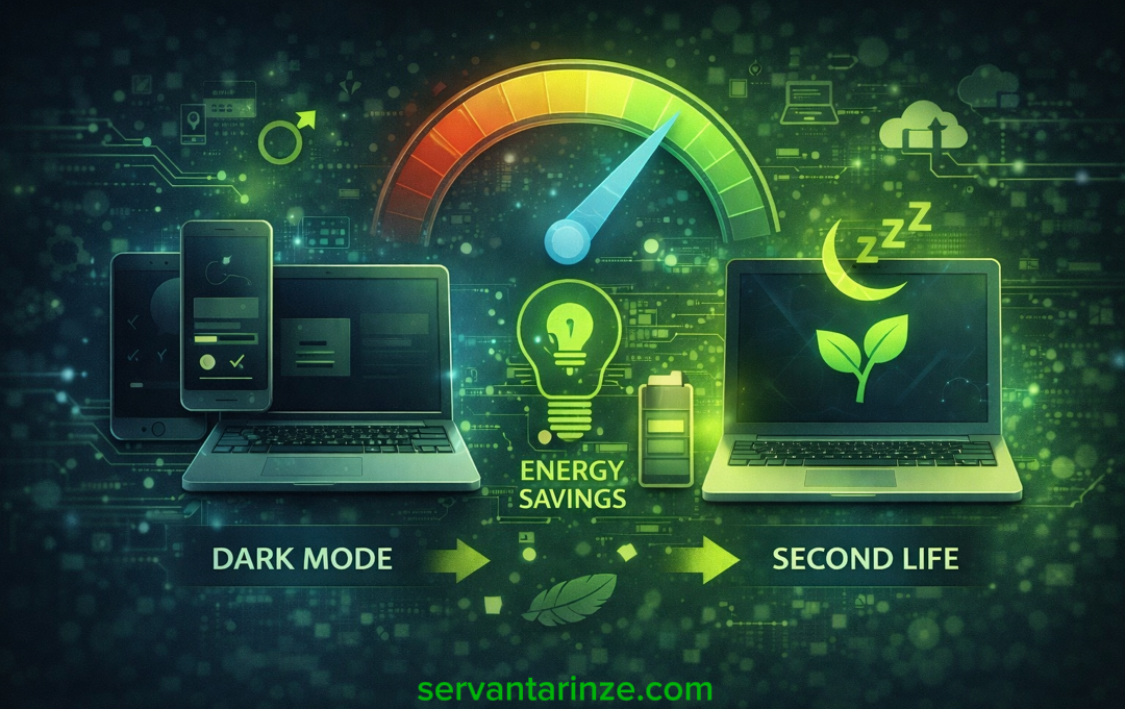
Hardware longevity alone is not enough. A truly zero-waste digital workspace must also address how energy is consumed every day. Digital workspaces draw power continuously — through devices, networking equipment, and cloud-based services — making energy efficiency a critical pillar of the circular tech economy.
Small behavioral changes compound into meaningful energy savings. Enabling automatic sleep modes, using dark mode where appropriate, reducing screen brightness, and shutting down unused peripherals can significantly lower daily power consumption. Choosing energy-efficient browsers and applications further reduces background processing and system load.
Beyond individual devices, energy-aware digital habits extend to how cloud services are used. Efficient file formats, reduced data duplication, and conscious streaming choices all influence the energy demand of data centers. Increasingly, tools are emerging that track energy usage and even shift workloads to times when renewable energy is more abundant.
By adopting low-power habits, your workspace becomes both environmentally and economically efficient. Reduced energy use lowers operating costs while aligning your digital routines with broader sustainability goals. Over time, these habits transform efficiency from an afterthought into a default mode of working.
4. Minimize Digital Waste and Optimize Cloud and Storage Use

Digital waste is often invisible, but it carries a very real environmental cost. Every unused file, redundant backup, abandoned app, or oversized media asset consumes storage resources and energy within data centers that power the modern digital workspace. In the circular tech economy, waste reduction applies not only to physical hardware but also to digital behavior.
Over time, digital clutter accumulates quietly. Old project folders, duplicate photos, forgotten email attachments, and rarely accessed cloud files continue to occupy storage and require energy to maintain. As data volumes grow, so does the demand for energy-intensive infrastructure — even when much of that data provides no ongoing value.
A zero-waste digital workspace treats data intentionally. Regular audits of files and applications help eliminate unnecessary storage, while efficient file formats and compression reduce long-term resource use. Increasingly, AI-powered tools are emerging that automatically identify unused files, recommend deletions, and optimize cloud storage based on access patterns.
By minimizing digital waste, you reduce energy consumption, improve system performance, and lower cloud costs. More importantly, you align everyday digital habits with the circular tech economy’s goal of eliminating waste at every stage — physical and virtual alike.
5. Implement Responsible E-Waste Management and Certified Recycling
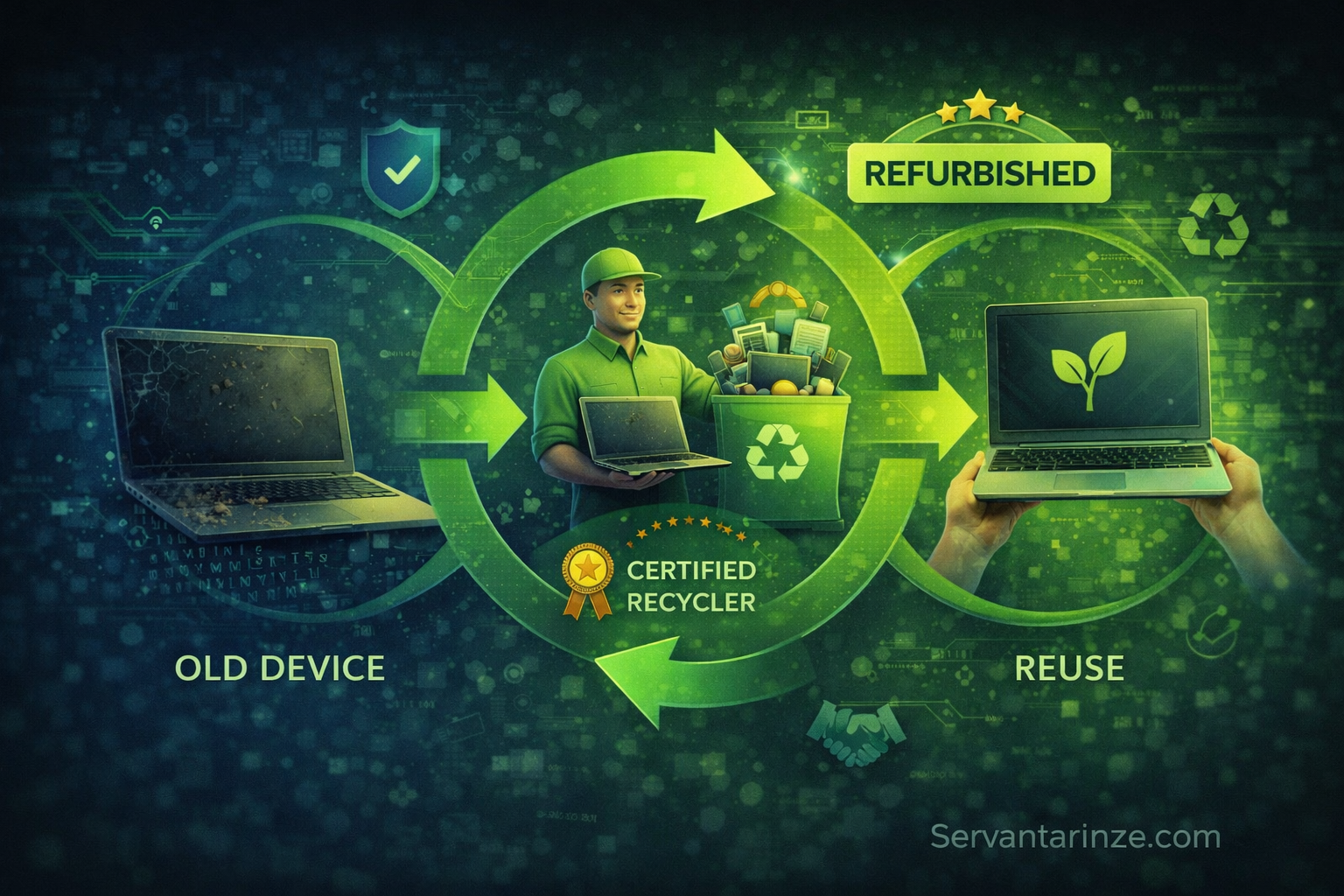
Even with the best maintenance practices, devices eventually reach the end of their usable life. At that point, responsible e-waste management becomes critical. Improper disposal allows toxic materials to leak into ecosystems while valuable metals are lost instead of recovered and reused. The circular tech economy depends on closing this loop effectively.
Certified recycling programs ensure that electronics are dismantled safely, materials are recovered efficiently, and hazardous components are handled responsibly. Standards such as R2 and e-Stewards provide accountability, transparency, and traceability — protecting both the environment and personal data.
Trade-in and take-back programs also play a growing role in circular digital workspaces. Many manufacturers now refurbish returned devices or recycle components through controlled processes. Large-scale initiatives, such as corporate circular centers, demonstrate how e-waste can be transformed into a resource rather than a liability.
In practical terms, this pillar means planning device end-of-life before it happens. Identify certified recyclers, use manufacturer take-back programs, and ensure data is securely wiped before disposal. Responsible e-waste management completes the lifecycle of your devices while reinforcing the circular tech economy in action.
6. Integrate Digital Product Passports and Lifecycle Transparency
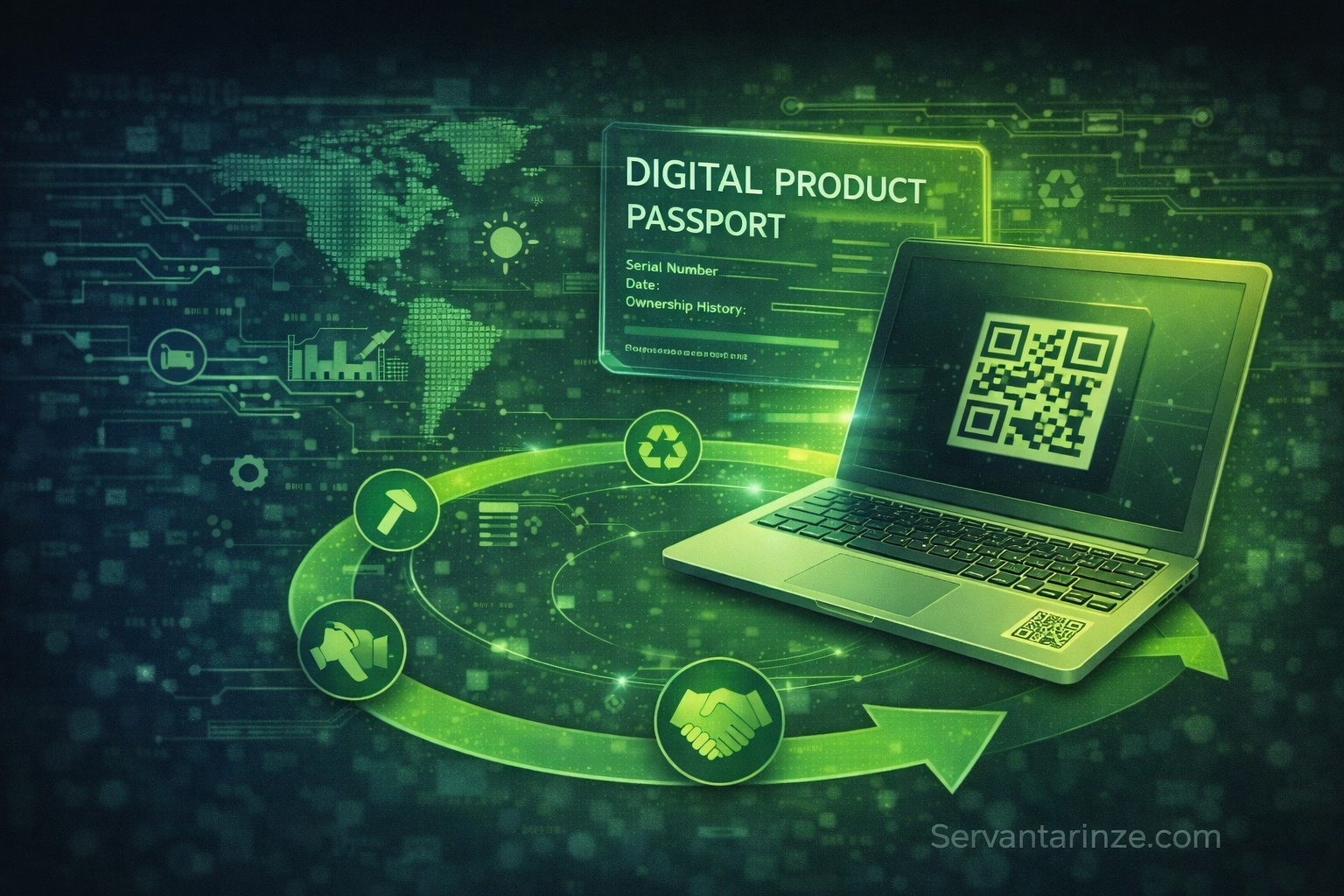
One of the most transformative developments shaping the circular tech economy is the rise of Digital Product Passports. These systems provide transparent information about a device’s materials, repairability, carbon footprint, and end-of-life options — empowering consumers to make informed, sustainable decisions.
As regulatory frameworks expand, especially across global markets, Digital Product Passports are becoming standard for electronics. By scanning a product or accessing its digital record, users can understand how long a device is expected to last, how it can be repaired, and how it should be recycled.
For digital workspaces, this transparency simplifies sustainable decision-making. Instead of relying on marketing claims, buyers can evaluate real lifecycle data when selecting devices. Over time, this encourages manufacturers to design products that perform better across their entire lifespan, not just at the point of sale.
Integrating lifecycle transparency into purchasing decisions strengthens the circular tech economy by rewarding responsible design. It shifts power toward users, aligns with emerging regulations, and ensures that sustainability is built into technology choices from the start.
7. Build Sustainable Streaming and Content Consumption Habits
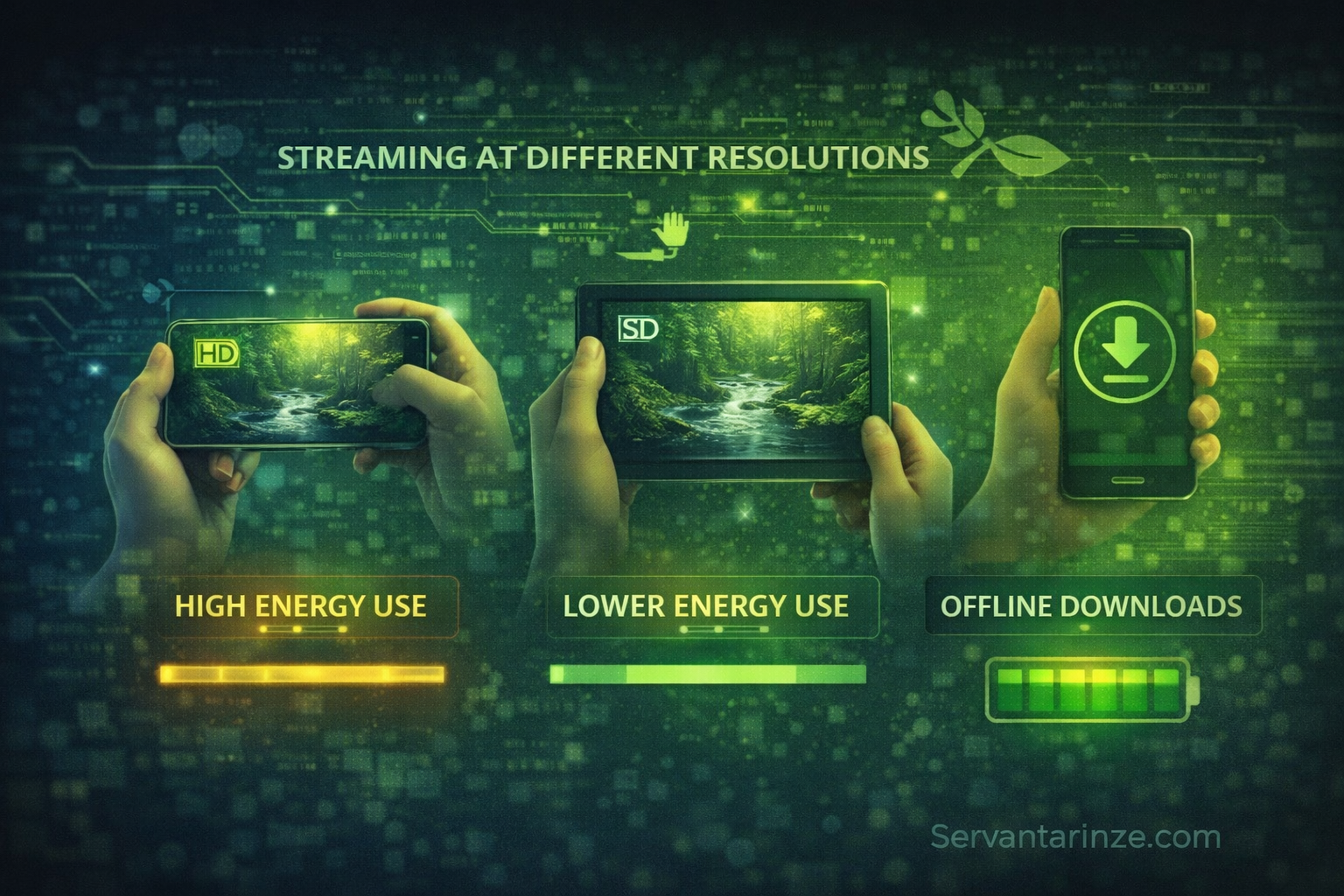
Streaming and content consumption have become core elements of modern digital workspaces. Video meetings, cloud-based training, entertainment during breaks, and constant media access all rely on energy-intensive infrastructure. In the circular tech economy, sustainability also means being mindful of how digital content is consumed, not just how devices are built.
Higher resolutions, continuous autoplay, and unnecessary background streaming significantly increase data transfer and energy demand across networks and data centers. While these impacts may seem small individually, they scale rapidly across millions of users and daily habits. Sustainable streaming does not require abandoning digital content, but it does require intentional choices.
Practical steps include reducing resolution when ultra-high definition is unnecessary, downloading content for offline use, disabling autoplay features, and favoring platforms that invest in energy-efficient delivery systems. For work environments, encouraging audio-only meetings when video is not essential can also reduce bandwidth and power use without sacrificing productivity.
By aligning content habits with sustainability goals, digital workspaces can significantly reduce their indirect energy footprint. These choices reinforce the circular tech economy by addressing waste and inefficiency at the behavioral level, where long-term change is most effective.
Read also: 9 Eco-Friendly Gadgets That Help You Stream, Work, and Live Greener
8. Foster a Regenerative Mindset and Community-Centered Culture
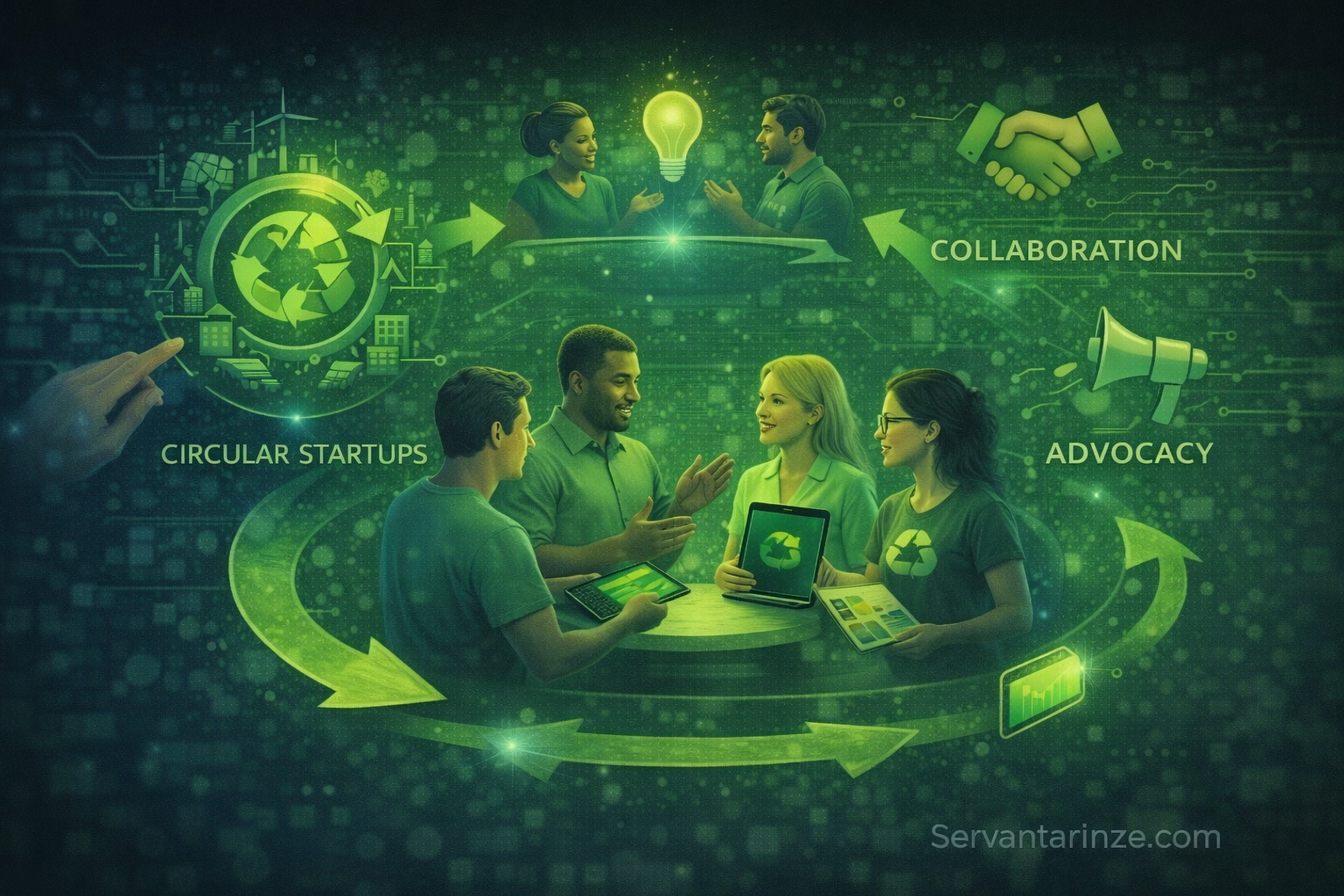
The final pillar of a zero-waste digital workspace goes beyond tools and habits. It is about mindset. A regenerative approach recognizes that technology systems exist within broader social and environmental ecosystems. Instead of merely reducing harm, regenerative thinking seeks to restore value, share knowledge, and create positive feedback loops.
This mindset shows up in simple but powerful ways. Sharing repair knowledge, supporting circular startups, advocating for right-to-repair policies, and normalizing sustainable tech practices within teams all contribute to systemic change. When sustainability becomes part of workplace culture, individual actions multiply in impact.
Community-centered approaches also strengthen resilience. Teams that prioritize repair, reuse, and knowledge-sharing are better equipped to adapt to supply chain disruptions, regulatory changes, and evolving expectations. Over time, regenerative digital cultures turn sustainability from a constraint into a competitive advantage.
Within the circular tech economy, regeneration is the ultimate goal. A digital workspace that supports learning, collaboration, and long-term value creation does more than reduce waste — it actively contributes to a healthier technological future.
Real-World Examples and Case Studies
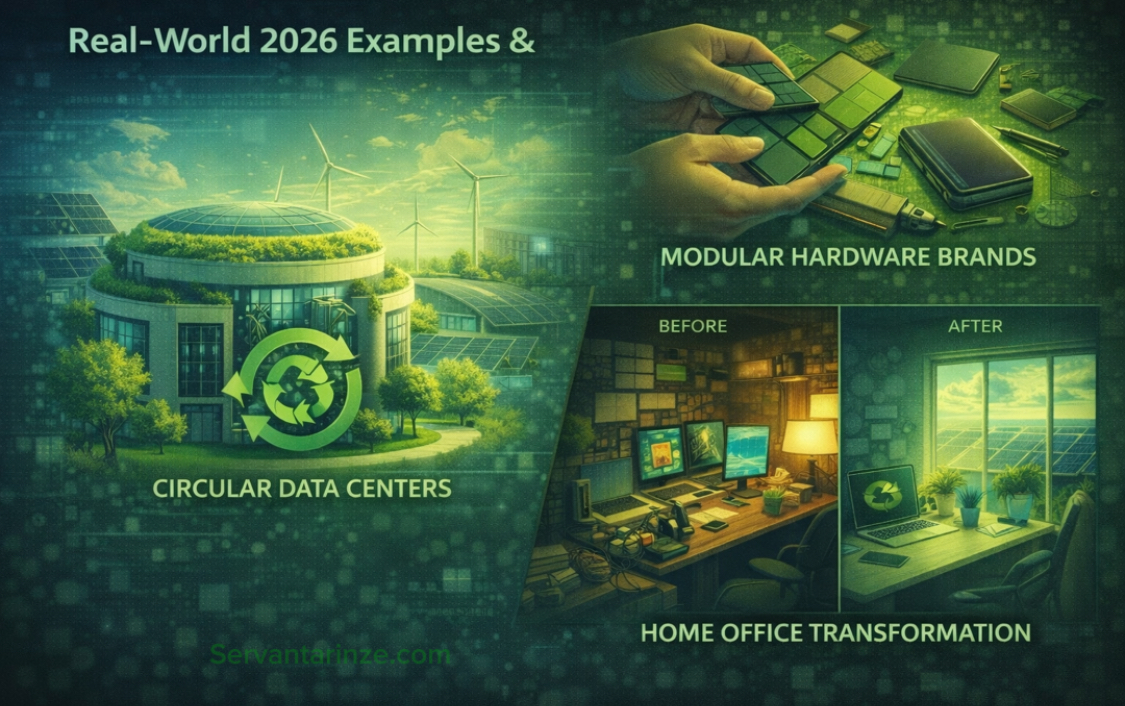
Circular principles are already reshaping how organizations and individuals approach digital workspaces. Large technology companies are investing heavily in circular initiatives, from expanding device take-back programs to redesigning hardware for longer lifespans and easier recycling. These efforts demonstrate that sustainability and innovation are not opposing forces.
Major manufacturers have introduced circular supply chain models that prioritize refurbished devices, recovered materials, and transparent lifecycle tracking. Corporate circular centers process returned hardware at scale, recovering components and reintegrating them into new products. These systems reduce waste while lowering production costs and emissions.
At the same time, smaller businesses and home offices are achieving measurable results through practical changes. Some have reduced electronic waste by more than half by extending device lifespans, switching to refurbished equipment, and optimizing cloud usage. Others report lower energy bills and improved performance after adopting low-power habits and digital decluttering routines.
Startups are also accelerating the transition. AI-powered waste tracking, modular electronics, and sustainable data services are making circular practices more accessible than ever. These real-world examples show that building a zero-waste digital workspace is not theoretical — it is already happening, across scales and industries.
Challenges, Timeline, and Measuring Success
Transitioning to a zero-waste digital workspace within the circular tech economy is achievable, but it is not without challenges. The most common barriers are not technological — they are practical and behavioral. Upfront costs for modular hardware, limited availability in some regions, and ingrained habits around constant upgrades can slow adoption if they are not addressed thoughtfully.
Another challenge lies in perception. Sustainable technology is often viewed as a compromise, even though many circular practices improve performance, reliability, and cost efficiency over time. Overcoming this mindset requires clear communication, transparency, and evidence that circular digital workspaces deliver real value beyond environmental benefits.
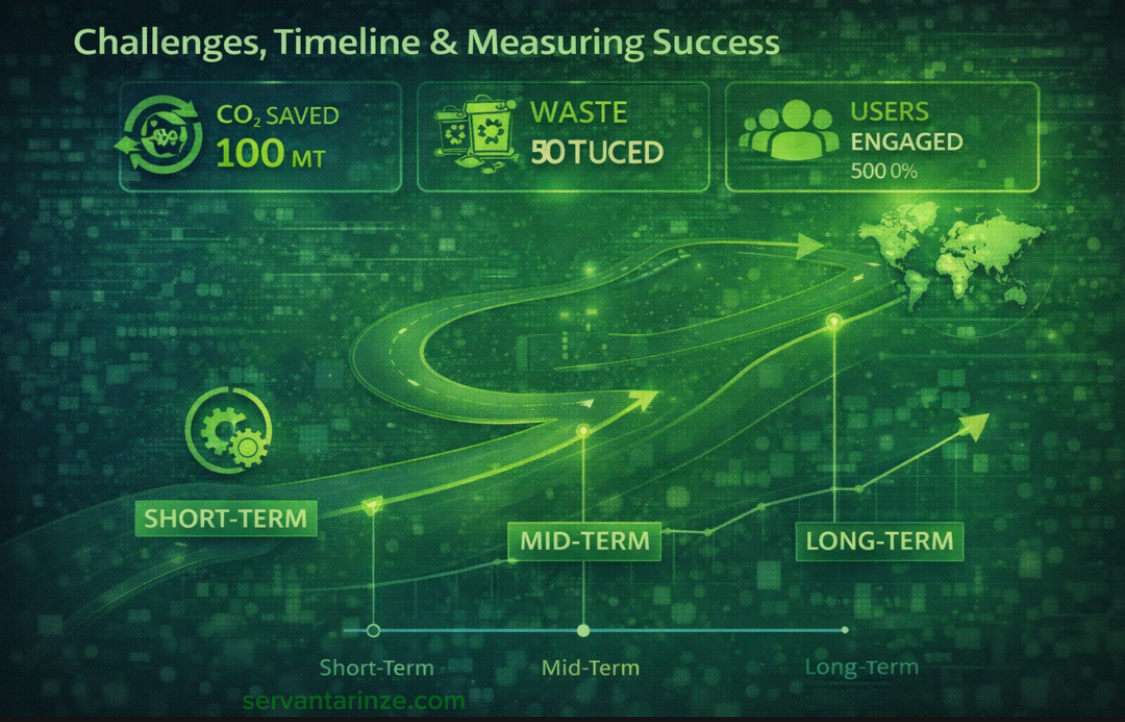
A practical roadmap helps turn intention into action. In the short term, focus on habits: energy-efficient settings, digital decluttering, and responsible streaming. Medium-term changes include extending device lifespans, adopting refurbished hardware, and improving cloud efficiency. Long-term progress involves aligning purchasing decisions with lifecycle transparency, advocating for repair-friendly policies, and supporting circular innovation.
Measuring success is essential. Track energy consumption, monitor how long devices remain in use, and record how much electronic waste is diverted through repair, resale, or certified recycling. Carbon footprint calculators, energy monitoring tools, and simple inventory tracking can turn sustainability into measurable progress rather than abstract goals.
You may like: Green Streaming: 9 Ways Technology Is Becoming More Sustainable
Why These Numbers Matter — And How to Read Them Correctly
Discussions around electronic waste and digital sustainability often rely on large, global statistics.
Figures such as “over 60 million tons of electronic waste per year” are not meant to be exact counters,
but indicators of scale — showing how deeply modern technology is intertwined with material waste and energy use.
The widely cited estimate of 62 million tons of global e-waste originates from the
Global E-Waste Monitor,
a joint initiative of the United Nations University, ITU, and other international partners.
More recent projections suggest that annual electronic waste generation is continuing to rise,
with estimates commonly ranging between 65 and 75 million tons globally as we move through the mid-2020s.
Similarly, data center electricity consumption is often reported at around
1–2% of global electricity use, based on assessments from organizations such as the
International Energy Agency (IEA).
Some newer analyses indicate this share may increase as cloud computing, artificial intelligence workloads,
and high-resolution streaming continue to expand.
Rather than focusing on a single precise number, the goal of this guide is to highlight a clear reality:
digital workspaces — from personal laptops to cloud infrastructure — have a measurable and growing environmental footprint.
The circular tech economy responds to this challenge not by chasing perfect statistics, but by redesigning systems
so that devices last longer, waste is reduced at the source, and energy use becomes more intentional.
This approach aligns with the principles promoted by organizations such as the
Ellen MacArthur Foundation,
which emphasizes circular design, reuse, repair, and lifecycle thinking as the most effective long-term strategy
for reducing environmental impact across technology and industry.
In other words, the exact global totals will continue to evolve — but the direction is unmistakable.
By applying circular principles at the level of your own digital workspace, you move from abstract awareness
to practical action, regardless of how global figures are updated year by year.
Conclusion and Call to Action

A zero-waste digital workspace is no longer an idealistic concept — it is a practical and necessary evolution of how we use technology. By embracing the principles of the circular tech economy, individuals and organizations can reduce waste, lower costs, and future-proof their digital environments against regulatory and resource pressures.
The tools already exist. Modular hardware, refurbished devices, energy-efficient habits, digital cleanup, responsible recycling, and lifecycle transparency are all accessible today. What matters most is consistency — small, intentional actions compounded over time create meaningful change.
As we move toward the end of this decade, circular practices will increasingly become the standard rather than the exception. Digital workspaces that adapt early will not only reduce their environmental footprint but also gain resilience, flexibility, and long-term value in a rapidly changing technological landscape.
Start small, but start now. Commit to a 30-day zero-waste digital workspace challenge. Audit your devices, clean your data, adjust your energy settings, and plan for responsible upgrades. Share what works, refine what does not, and help normalize sustainable digital habits within your community. Your workspace is more than a collection of tools — it is part of the solution.
Turn Insight Into Action
Reading about sustainable digital practices is the first step.
But real change happens when ideas turn into small, repeatable actions.
That’s why this guide includes a practical 30-Day Zero-Waste Digital Workspace Checklist —
designed to help you apply everything you’ve learned in this article, one realistic day at a time.
The checklist is not about perfection or doing everything at once.
It’s about building clarity, efficiency, and future-ready digital habits that last.
📄 Free Download: 30-Day Zero-Waste Digital Workspace Checklist
A printable, beginner-friendly PDF that helps you:
- Reduce digital clutter without stress
- Extend device lifespan and battery health
- Lower unnecessary energy use
- Adopt circular and future-ready tech habits
Use it once, revisit it monthly, or return to it whenever your digital life needs a reset.
⬇️ Download the 30-Day Checklist (PDF)
No sign-up. No pressure. Just a tool you can actually use.
Frequently Asked Questions About the Circular Tech Economy and Zero-Waste Digital Workspaces
What is the circular tech economy?
The circular tech economy is an approach to designing, using, and managing technology that eliminates waste by extending product lifecycles, enabling repair and reuse, and recovering materials at end of life. Instead of a linear “use and discard” model, it focuses on keeping digital tools and resources in continuous, productive use.
What is a zero-waste digital workspace?
A zero-waste digital workspace minimizes both physical and digital waste by combining longer-lasting hardware, energy-efficient habits, optimized cloud usage, and responsible recycling. The goal is not perfection, but intentional design and daily practices that significantly reduce environmental impact.
How does a digital workspace contribute to e-waste and emissions?
Digital workspaces rely on devices, networking equipment, and cloud infrastructure that consume energy and generate waste. Frequent device upgrades, unmanaged data storage, and inefficient streaming habits all increase electricity use and accelerate electronic waste generation.
Are refurbished devices reliable for professional work?
Yes. Certified refurbished devices are tested, repaired, and restored to reliable working condition. For many professionals and small businesses, refurbished laptops and monitors deliver strong performance while significantly reducing cost and environmental impact.
What are Digital Product Passports?
Digital Product Passports provide transparent lifecycle information about electronic products, including materials, repairability, carbon footprint, and recycling options. They help buyers make informed, sustainable choices and support circular economy practices.
How can I reduce digital waste without deleting important files?
Digital waste reduction focuses on removing unused or duplicate files, compressing large data sets, and organizing storage intentionally. Using efficient file formats and periodic audits allows you to keep what matters while minimizing unnecessary storage and energy use.
Does building a zero-waste digital workspace save money?
In many cases, yes. Extending device lifespans, buying refurbished hardware, reducing energy use, and optimizing cloud storage often lower long-term costs while improving efficiency and resilience.
Is a zero-waste digital workspace realistic for individuals and small teams?
Absolutely. Many of the most impactful changes involve habits and decisions that individuals and small teams can implement immediately, such as energy-efficient settings, responsible upgrades, and certified recycling practices.
How do I measure progress toward a zero-waste digital workspace?
Progress can be measured by tracking device lifespan, energy consumption, cloud storage reduction, and the amount of electronic waste diverted through repair or recycling. Simple metrics help turn sustainability into actionable results.
When will circular digital workspaces become the norm?
As regulations, transparency standards, and consumer expectations continue to evolve, circular digital workspaces are likely to become standard practice by the end of this decade, especially for organizations seeking resilience and compliance.