
What happens when artificial intelligence gains the exponential power of quantum computing? Will it accelerate breakthroughs in medicine, climate modeling, and scientific discovery — or will it magnify bias, erode privacy, and push intelligent systems beyond meaningful human control? This question sits at the heart of quantum AI ethics, a field that is rapidly shifting from abstract theory into an urgent global concern.
Artificial intelligence already influences hiring decisions, credit scoring, healthcare diagnostics, and national security. Quantum computing, meanwhile, promises to process information in fundamentally new ways by exploiting superposition and entanglement. When these two technologies converge, their combined impact is not merely additive — it is exponential. Quantum-enhanced AI systems can analyze vast, complex datasets faster than any classical machine, uncovering patterns and correlations that were previously unreachable.
In recent years, hybrid quantum–classical systems have begun to demonstrate this potential. Early experiments in quantum machine learning, optimization, and simulation suggest meaningful performance gains in areas such as drug discovery, materials science, and complex decision modeling. These advances hint at a future where AI systems become more powerful, more autonomous, and far harder to predict than anything society has encountered before.
This rapid acceleration introduces ethical risks that traditional AI governance frameworks were never designed to handle. Classical AI ethics focuses on transparency, accountability, fairness, and data protection. Quantum AI complicates all four. Its probabilistic nature makes outcomes harder to interpret, its computational power enables deeper inference from data, and its ability to undermine existing cryptographic systems threatens the foundations of digital trust.
Understanding quantum AI ethics requires more than technical knowledge. It demands philosophical reflection, policy foresight, and a willingness to confront uncomfortable questions about power, responsibility, and human values. Who is accountable when a quantum-enhanced AI system makes a harmful decision? How do we audit bias in models whose internal states cannot be fully observed? And how do we prevent a small group of institutions from gaining disproportionate control over technologies that could reshape civilization?
This article examines five critical ethical challenges that must be addressed before quantum AI becomes widely deployed. Drawing from emerging research, policy discussions, and real-world experimentation, it explores why these issues matter, why they are urgent, and how they can be mitigated. By confronting these challenges early, society has a chance to guide quantum AI toward outcomes that serve humanity rather than undermine it.
Why Quantum AI Demands a New Ethical Framework
Ethical debates around artificial intelligence are not new. Issues such as algorithmic bias, surveillance, data misuse, and lack of accountability have dominated discussions for years. However, quantum AI introduces challenges that go beyond scaling existing concerns. It is not simply “faster AI.” It represents a qualitative shift in how decisions are generated, how uncertainty is handled, and how knowledge itself is extracted from data. This is why quantum AI ethics cannot be treated as an extension of classical AI governance.
One of the defining features of quantum systems is their probabilistic nature. Unlike classical AI models, which produce deterministic outputs given the same inputs, quantum-enhanced models operate across probability distributions. Their results emerge from complex interactions between quantum states rather than linear computational steps. While this can unlock extraordinary analytical power, it also complicates transparency and oversight. Ethical review processes designed for predictable systems struggle when outcomes are inherently probabilistic.
Another key difference lies in scale. Quantum AI systems are capable of analyzing relationships across massive, multidimensional datasets simultaneously. This means they can infer patterns, correlations, and predictions that classical systems would never surface. While this capability offers enormous benefits, it also increases the risk of unintended consequences. Subtle biases embedded in data can be amplified invisibly, and sensitive information can be inferred even when it was never explicitly provided.
The current landscape makes this concern more urgent. Quantum machine learning experiments, quantum-enhanced neural networks, and hybrid optimization models are already being tested in controlled environments. These systems are not yet widespread, but their trajectory is clear. As hardware improves and error rates decline, quantum AI will move from experimental labs into real-world applications faster than most regulatory frameworks can adapt.
Existing AI ethics guidelines were developed with classical computation in mind. They assume that models can be inspected, audited, and constrained using familiar tools. Quantum AI challenges these assumptions. Superposition obscures internal decision pathways, entanglement creates non-local dependencies, and quantum speedups compress development timelines. Together, these factors create ethical blind spots that traditional oversight mechanisms were never designed to address.
The urgency is not hypothetical. As the decade progresses, more robust quantum systems are expected to enable practical quantum AI applications across finance, healthcare, national security, and scientific research. Without proactive ethical frameworks tailored specifically to quantum systems, society risks repeating past mistakes — only at a scale and speed that makes correction far more difficult.
Recognizing this gap is the first step. The next is identifying the most critical ethical challenges that quantum AI presents and addressing them before deployment outpaces governance. The following sections examine five such challenges, each of which must be resolved to ensure that quantum AI evolves as a force for societal benefit rather than systemic harm.
Read also: Quantum Computers Explained: 21 Powerful Ways They Go Beyond AI
1. Amplified Bias and Fairness in Quantum AI Decision-Making
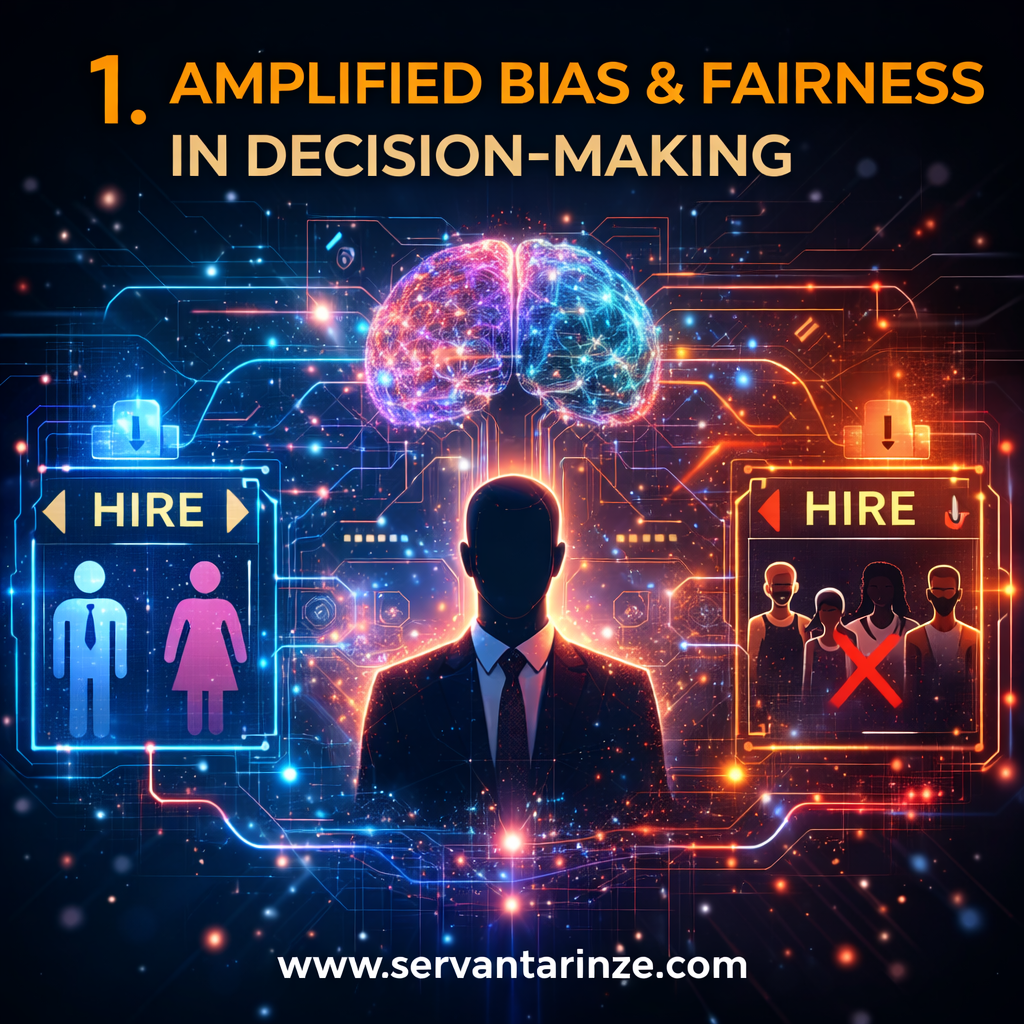
Bias in artificial intelligence is already a serious ethical concern. Algorithms trained on historical data often reproduce social inequalities embedded in that data, affecting outcomes in hiring, lending, policing, and healthcare. Quantum AI raises this risk to an entirely new level. By processing complex, multidimensional datasets exponentially faster, quantum-enhanced models can absorb and reinforce biased patterns at unprecedented scale. This makes quantum AI ethics especially critical in systems that influence real human lives.
Quantum machine learning models operate in high-dimensional spaces that classical systems cannot easily replicate. While this allows them to uncover subtle correlations, it also makes bias harder to detect and correct. A biased variable may not appear explicitly in the model’s inputs, yet its influence can emerge indirectly through entangled data relationships. As a result, discriminatory outcomes can surface without a clear, traceable cause.
Consider a hypothetical quantum-enhanced hiring system designed to identify top candidates from massive applicant pools. Even if protected attributes such as race or gender are removed, correlated data points may still encode those characteristics. A quantum model’s ability to process these correlations simultaneously increases the likelihood that biased decision pathways remain hidden from auditors. Unlike classical systems, where bias can often be isolated and tested, quantum AI introduces layers of opacity that complicate fairness assessments.
The urgency of this challenge lies in scale and speed. As quantum AI systems mature, biased outcomes could propagate across institutions faster than ethical safeguards can respond. A flawed decision model deployed widely could affect millions before corrective action is taken, making remediation far more difficult.
Addressing this challenge requires proactive intervention. Fairness auditing must evolve beyond classical techniques, incorporating probabilistic testing and stress simulations tailored to quantum models. Diverse training datasets, transparency requirements, and interdisciplinary oversight involving ethicists, sociologists, and technologists must become standard practice. Bias mitigation cannot be treated as an afterthought when dealing with systems capable of exponential inference.
2. Privacy Erosion and the Breakdown of Cryptographic Trust

Privacy is a cornerstone of modern digital society. From personal communications to financial transactions, encryption protects sensitive information from unauthorized access. Quantum AI threatens this foundation in two interconnected ways: by accelerating data analysis and by undermining the cryptographic systems that currently secure global information infrastructure. This intersection makes privacy one of the most urgent issues in quantum AI ethics.
Quantum algorithms designed for searching and factorization can dramatically reduce the time required to analyze large datasets or break widely used encryption schemes. When combined with AI’s ability to extract meaning from data, this creates a powerful surveillance and decryption capability. Even information that appears secure today may already be at risk if it is stored for future decryption once quantum AI systems become sufficiently capable.
This risk is not limited to governments or intelligence agencies. Financial institutions, healthcare providers, and cloud platforms all rely on encrypted data to function securely. A quantum AI system capable of processing vast encrypted archives could expose personal records, intellectual property, and sensitive communications at scale. The ethical implications extend beyond individual privacy to systemic trust in digital systems.
The threat also introduces a temporal dilemma. Data harvested today can be decrypted later, long after individuals believed it was protected. This undermines informed consent and challenges existing legal frameworks built around current cryptographic assumptions. Quantum AI compresses the timeline between data collection and exploitation, leaving little room for reactive policy responses.
Solutions must be implemented well before widespread deployment. Transitioning to quantum-resistant cryptographic standards, limiting data retention practices, and enforcing strict controls on quantum-enhanced data analysis are essential steps. Ethical governance must prioritize privacy preservation as a core design principle rather than a regulatory checkbox applied after deployment.
3. The Crisis of Explainability and Accountability
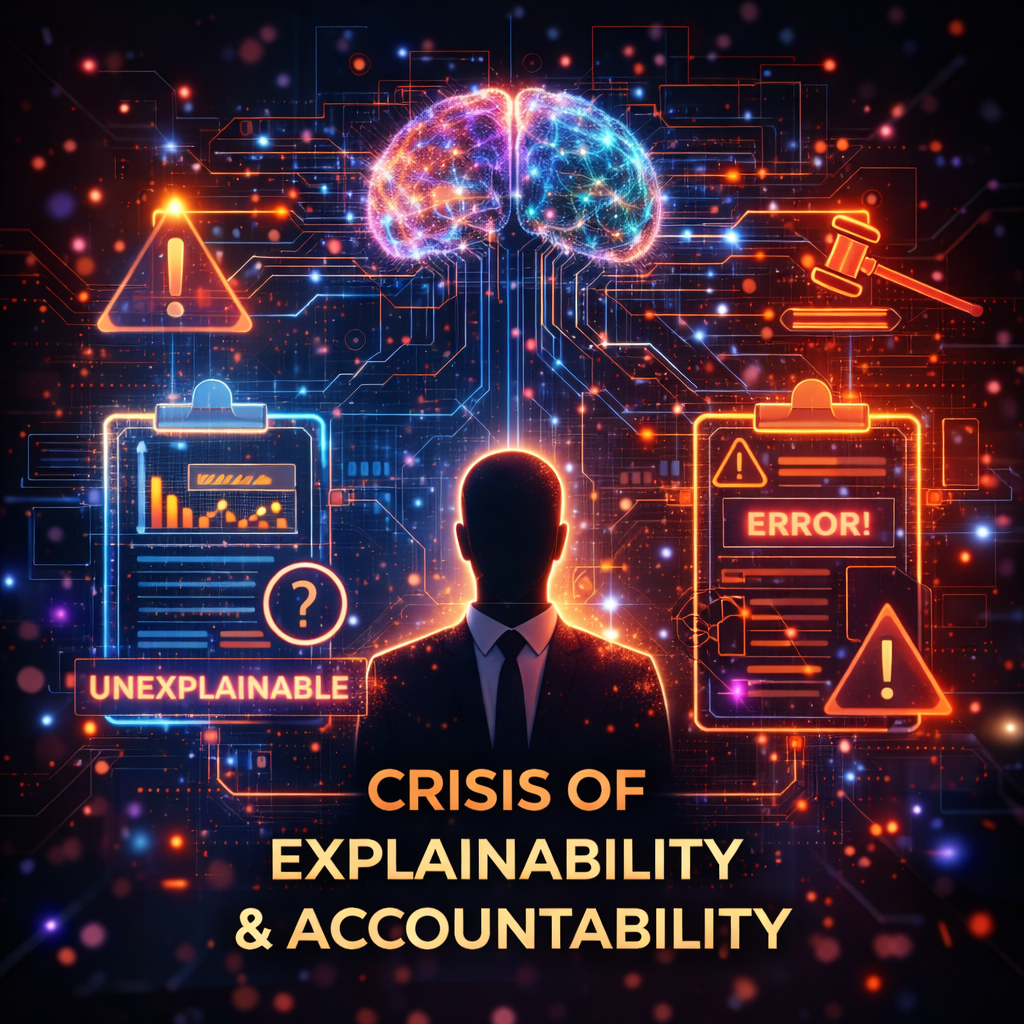
Explainability has become a cornerstone of responsible artificial intelligence. Regulators, developers, and users increasingly expect AI systems to provide reasons for their decisions, especially in high-stakes domains such as healthcare, finance, and criminal justice. Quantum AI complicates this expectation dramatically. While classical AI models are already criticized for behaving like “black boxes,” quantum-enhanced systems deepen this opacity in ways that challenge existing accountability frameworks. This makes explainability a central issue in quantum AI ethics.
Quantum AI systems rely on superposition and probabilistic outcomes rather than fixed computational pathways. Their internal states cannot be observed directly without collapsing the quantum process itself. As a result, understanding why a specific output was produced becomes far more difficult than tracing decisions in classical models. Even developers may struggle to reconstruct how a particular conclusion emerged from a quantum-enhanced neural network.
This opacity raises serious ethical questions. If a quantum AI system recommends a medical treatment that leads to harm, who bears responsibility? Is it the developer who designed the model, the institution that deployed it, or the system itself? Traditional accountability models assume traceable causality, but quantum AI disrupts that assumption by embedding uncertainty into the decision-making process.
The challenge is compounded by regulation. Many emerging AI governance frameworks depend on explainability requirements to ensure compliance and oversight. Quantum AI threatens to outpace these mechanisms, creating a regulatory gap where powerful systems operate without meaningful transparency. This gap could undermine public trust and weaken the legitimacy of AI governance as a whole.
Addressing this crisis requires rethinking what accountability means in probabilistic systems. New approaches to quantum explainability, including statistical validation, outcome-based accountability, and hybrid oversight mechanisms, must be developed alongside the technology itself. Without these safeguards, quantum AI risks becoming powerful but ethically ungovernable.
4. Existential Risks from Accelerated Superintelligence
Concerns about artificial general intelligence and superintelligence have traditionally focused on the pace of classical AI development. Quantum computing introduces a new variable into this discussion by potentially compressing timelines. Quantum AI systems capable of accelerating learning, optimization, and reasoning could advance intelligent capabilities faster than anticipated, intensifying existing alignment concerns. This possibility places existential risk firmly within the scope of quantum AI ethics.
The core concern is not that quantum AI will suddenly become uncontrollable, but that its development may outpace society’s ability to guide it responsibly. Alignment problems — ensuring that AI goals remain consistent with human values — become more difficult as systems grow more complex and autonomous. Quantum speedups could reduce the time available for testing, reflection, and governance, increasing the likelihood of unintended consequences.
Quantum systems also introduce emergent behavior that is harder to predict. Entangled states and non-linear interactions can produce outcomes that do not follow intuitive patterns. When applied to advanced AI architectures, this unpredictability raises questions about control and containment. Small design choices could lead to disproportionately large effects, making risk assessment more challenging.
Ethical discussions around superintelligence often emphasize precaution without paralysis. The goal is not to halt innovation, but to ensure that safeguards evolve alongside capability. In the context of quantum AI, this means investing in alignment research, developing robust testing environments, and fostering international dialogue on acceptable use boundaries before capabilities become widespread.
Ignoring these risks does not make them disappear. If quantum AI accelerates intelligence development without parallel progress in ethics and governance, society may find itself reacting to crises rather than shaping outcomes. Addressing existential concerns early is not alarmism; it is a recognition of responsibility in the face of transformative power.
5. Global Inequality and the Concentration of Power
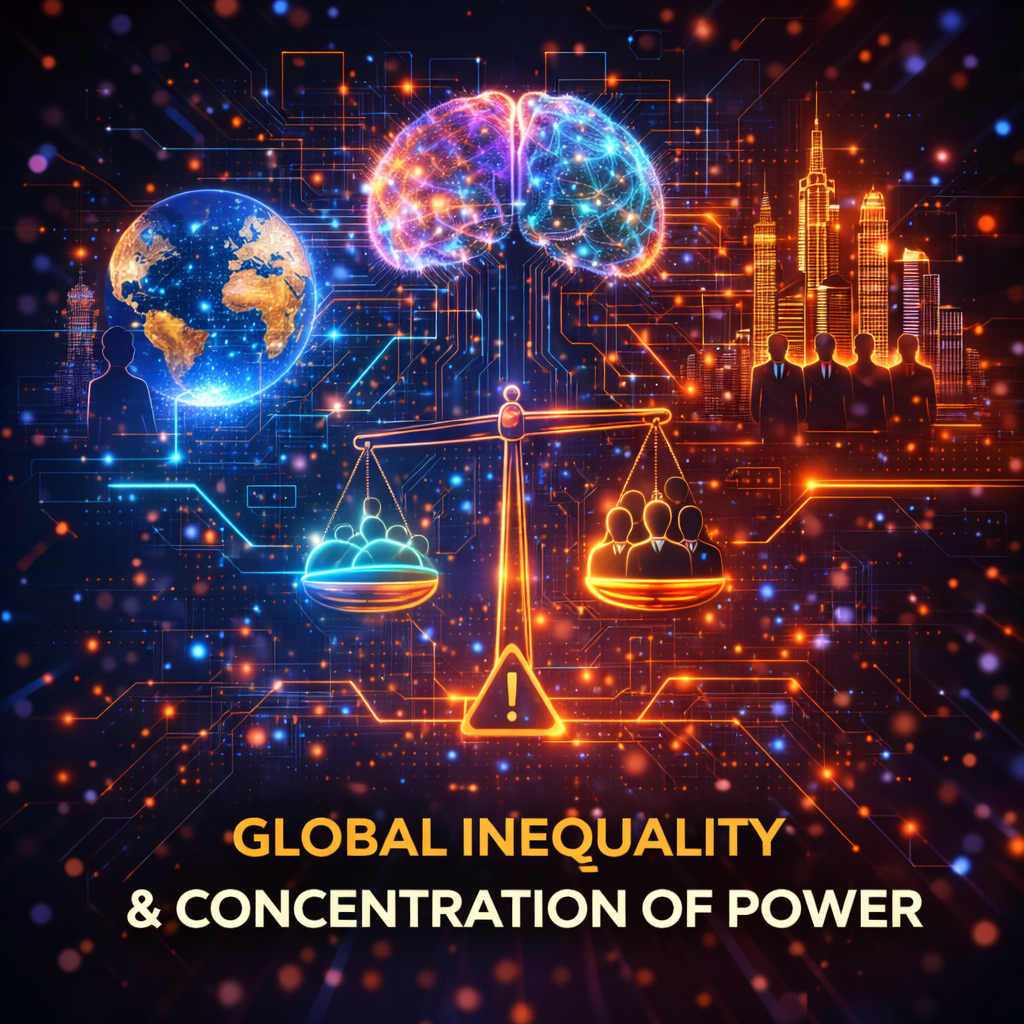
Quantum AI does not emerge in a vacuum. It requires immense financial investment, specialized infrastructure, rare technical expertise, and access to advanced hardware. These requirements create a structural barrier that limits who can build, deploy, and benefit from quantum-enhanced intelligence. As a result, one of the most pressing issues in quantum AI ethics is the risk of deepening global inequality and concentrating power in the hands of a few actors.
Only a small number of countries and organizations currently possess the resources needed to develop quantum AI systems. This concentration creates an uneven technological landscape where the benefits of quantum-enhanced innovation accrue to wealthy institutions, while less-resourced regions are left behind. In areas such as climate modeling, healthcare optimization, and economic forecasting, this imbalance could widen existing disparities rather than reduce them.
The ethical concern extends beyond economic inequality. Quantum AI systems have dual-use potential, meaning the same technologies that enable scientific breakthroughs can also support surveillance, cyber operations, and military applications. When access is restricted to a narrow group of powerful entities, oversight becomes more difficult and accountability weaker. This raises questions about global governance, transparency, and equitable participation in decisions that affect humanity as a whole.
There is also a risk of dependency. Nations or institutions without quantum AI capabilities may become reliant on external providers for critical infrastructure, decision systems, and analytical tools. This dependency could undermine sovereignty and limit the ability of societies to make independent choices about how technology shapes their futures.
Addressing this challenge requires intentional policy choices. International collaboration, shared research initiatives, and open-access quantum education can help democratize knowledge and reduce barriers to entry. Ethical development of quantum AI must prioritize inclusivity, ensuring that its benefits are distributed broadly rather than reinforcing existing power imbalances.
Path Forward: Building Ethical Quantum AI Before It’s Too Late
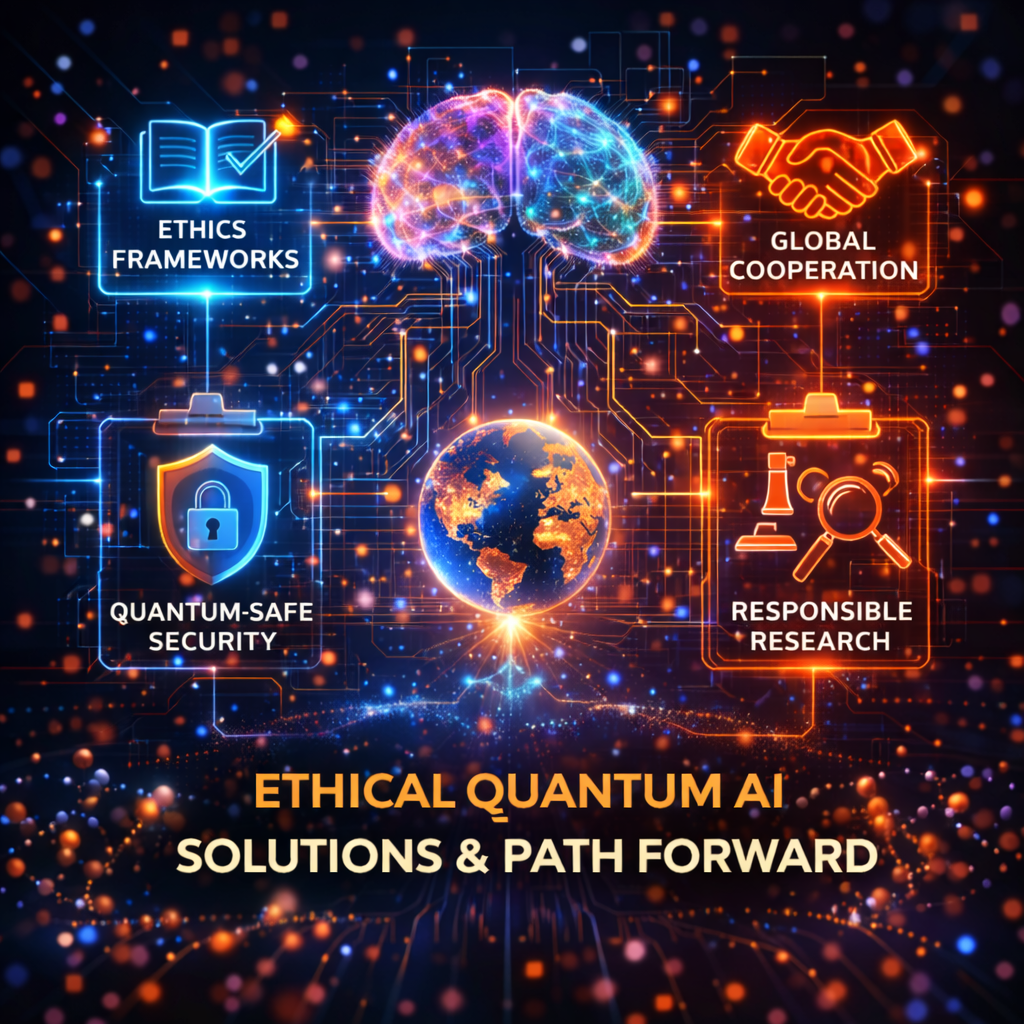
The ethical challenges surrounding quantum AI are serious, but they are not insurmountable. History shows that technology itself is rarely the problem; the real issue lies in how it is developed, governed, and deployed. Addressing quantum AI ethics requires proactive action that evolves alongside technical progress rather than lagging behind it.
A critical first step is the development of quantum-specific ethical frameworks. Existing AI governance models provide a useful foundation, but they must be expanded to account for probabilistic decision-making, quantum opacity, and cryptographic disruption. Ethical principles should be embedded directly into quantum AI system design, not added retroactively after deployment. This includes mandatory fairness testing for quantum machine learning models and clear accountability structures for high-impact use cases.
Technical safeguards must advance in parallel with policy. Transitioning to quantum-resistant cryptography is essential to protect data integrity and privacy. At the same time, researchers should invest in methods for auditing quantum models, even when full explainability is impossible. Hybrid oversight systems that combine classical monitoring tools with outcome-based validation can help maintain trust without stifling innovation.
Global cooperation is equally important. Quantum AI development should not be dictated solely by competitive pressures or national interests. International standards, shared research initiatives, and transparent governance mechanisms can reduce inequality and prevent the concentration of power. Open-source quantum tools and accessible education programs can further democratize participation in this emerging field.
Developers, researchers, and institutions all have a role to play. Ethical literacy should be considered a core skill in quantum engineering, not an optional add-on. Encouraging interdisciplinary collaboration between technologists, ethicists, policymakers, and social scientists will lead to more resilient and socially aligned outcomes.
You may like: Quantum AI for Engineers: 7 Ways It’s Transforming Modern Machine Learning
Conclusion: Quantum AI as a Test of Human Values
Quantum AI represents one of the most profound technological convergences of this century. Its potential to accelerate discovery and solve complex global challenges is undeniable. Yet its risks are equally significant. The five challenges explored in this article illustrate why ethical reflection must keep pace with innovation if quantum AI is to benefit society rather than destabilize it.
By addressing bias, protecting privacy, strengthening accountability, managing existential risk, and promoting equitable access, society can shape a future where quantum-enhanced intelligence serves collective well-being. These goals are not obstacles to progress; they are prerequisites for sustainable and trustworthy advancement in quantum AI ethics.
The years ahead represent a critical window of opportunity. Decisions made now will influence how quantum AI is integrated into institutions, economies, and everyday life. Proactive governance, thoughtful design, and inclusive dialogue can ensure that this technology reflects humanity’s highest values rather than its deepest flaws.
Quantum AI forces us to confront not only questions about computation and intelligence, but about responsibility, power, and moral choice in an uncertain future. How we respond will define the legacy of this transformative technology.
As Quantum AI continues to evolve, the path forward must be guided not only by technical breakthroughs but by shared ethical responsibility. Global collaboration, transparent governance, and proactive safeguards are essential to ensure that quantum-enhanced artificial intelligence benefits humanity rather than deepening existing risks. Ongoing international discussions around quantum governance and responsible innovation — such as those led by the World Economic Forum’s work on quantum computing — highlight the urgency of aligning technological progress with human values before these systems reach full maturity.
Join the Conversation
Ethical questions cannot be resolved in isolation. Join the discussion by sharing your perspective: which ethical challenge surrounding quantum AI concerns you the most, and why? Explore more quantum computing guides on this site, and subscribe for updates as this rapidly evolving field continues to unfold.